When I was very young, a book fell into my hands.
It was The Forty Rules of Love by Elif Shafak.
In Bulgarian, the title was simply Love. No adjectives. No explanations. Just Love.
At the time, I did not understand it with my mind. I understood it with my body. With a quiet recognition, as if something ancient had tapped me on the shoulder and said, remember this, you will need it later.
The novel tells the story of Ella Rubinstein, a woman living a safe, muted life, who is given a manuscript to read. Through that manuscript, her inner world begins to awaken. Not through logic or self improvement, but through love. Through the courage to step out of a life that no longer fits. Ella’s transformation mirrors what love truly does. It does not decorate your life. It dismantles it.
Inside Ella’s story lives another, far older one.
The story of Shams of Tabriz and Rumi.
Shams was a Sufi. A wandering mystic. A man of the road, of taverns, of deserts. Sufis believed that God could not be reached by intellect alone. They read the Qur’an not just with the mind, but with the heart, the breath, the nervous system. For them, scripture was layered. Words had skins. Meanings were hidden beneath meanings. Truth was something to be lived, not recited.
Rumi was the opposite.
He was a renowned scholar, a jurist, a teacher admired by thousands. He lived among books, students, sermons, respect. His faith was impeccable, his reputation flawless. He knew the Qur’an by memory. He spoke about God beautifully, intelligently, safely.
And then Shams arrived.
Not as a teacher. As an earthquake.
One of the first things Shams does is sacrilege. He takes Rumi’s beloved books and throws them into a pool of water. Rumi is horrified. Years of study, sacred texts, his entire identity floating, ruined. Shams looks at him calmly and asks what he is really grieving. The knowledge itself, or the image of himself as a man of knowledge. Later, when the books are retrieved, they are miraculously dry. The message is clear. Truth is not damaged by water. Only attachment is.
Shams does not want Rumi to be knowledgeable. He wants him to be empty.
He sends Rumi into places scholars do not go.
He asks him to enter a brothel. There, Rumi meets the Desert Rose, a woman of extraordinary beauty who has been pushed into prostitution by life’s cruelty. Society calls her impure. Shams sees her as a soul soaked in longing. Through her, Rumi begins to understand that holiness is not where people are praised, but where they are wounded.
Shams takes him into taverns. He makes him sit with drunks, with outcasts, with the forgotten. In one scene, a drunk man is brutally beaten by religious fanatics for his public intoxication. Rumi is shaken. Shams tells him that faith without compassion is violence dressed as virtue. That God is closer to the broken man on the ground than to those swinging their fists in His name.
Again and again, Shams dismantles Rumi’s certainties.
He teaches him that Sufis do not read the Qur’an literally. They read it symbolically, inwardly, alchemically. Every verse has an outer meaning and an inner truth. What matters is not how perfectly you follow the rules, but how deeply you allow yourself to be transformed by love. God is not found in obedience alone, but in surrender. In presence. In the courage to sit with contradiction.
Under Shams’ influence, Rumi loses everything that made him respected.
He stops teaching. His students abandon him. His family is disturbed. People whisper. His life collapses.
And in the ruins, something else is born.
Poetry. Ecstasy. Devotion. A love so vast it no longer belongs to one person, but to existence itself.
Rumi does not become less religious. He becomes more alive.
I carried this story inside me for years.
And then, much later, life brought me to Bali.
And without realizing it at first, I found myself not reading The Forty Rules of Love, but living it.
The first time I arrived in Bali was last December. I came here with the person I believed was the love of my life. The man I had devoted myself to. The man I quietly imagined growing old with. Bali had lived inside me for years before I ever set foot on the island. Almost everyone who knew me would say it, casually, knowingly. You belong in Bali. And there I was at last. With the person I loved, in the place I had dreamed of.
But the island had a different plan for us.
On our very first day, we did a purification ceremony, Melukat. Holy water poured over our heads, prayers murmured into the air, intentions offered gently. I thought it was a blessing. In reality, it was a mirror.
Slowly, cracks began to appear. Not all at once. Daily. Quietly. Small moments that didn’t settle. Words that missed each other. Silences that grew heavier than sound. The foundation of what I believed we had built was far more fragile than I could admit. It splintered with every breath we took.
By the end of the trip, we parted ways.
And something in me shattered.
At the same time, my external life was reaching a peak. I had just left JP Morgan, where I was Vice President in Software Engineering, to step into a new role at Trafigura at Executive Director level. A title people far older than me work decades to reach. It should have felt triumphant. It should have felt like arrival.
Instead, on the very first day of that new job, we broke up.
The timing felt almost cruel in its precision. As my career ascended, my inner world collapsed.
That same day, I fell to the floor in a panic attack. My father was on the phone, holding me through my tears, grounding me with his voice while everything inside me unraveled. And then came what I later understood to be the dark night of the soul.
Ten months of emptiness.
Isolation. Days when I wished I could disappear, become invisible. I couldn’t feel the sun on my skin. I didn’t recognize myself anymore. I avoided mirrors because I couldn’t bear to meet my own eyes. I carried guilt, loneliness, and a quiet despair that no title, no success, no validation could touch.
I was breaking.
And yet, instead of running outward, something in me turned inward.
I turned to myself.
I turned to God.
And I turned to love. Not love as attachment, not love as longing. Love for myself.
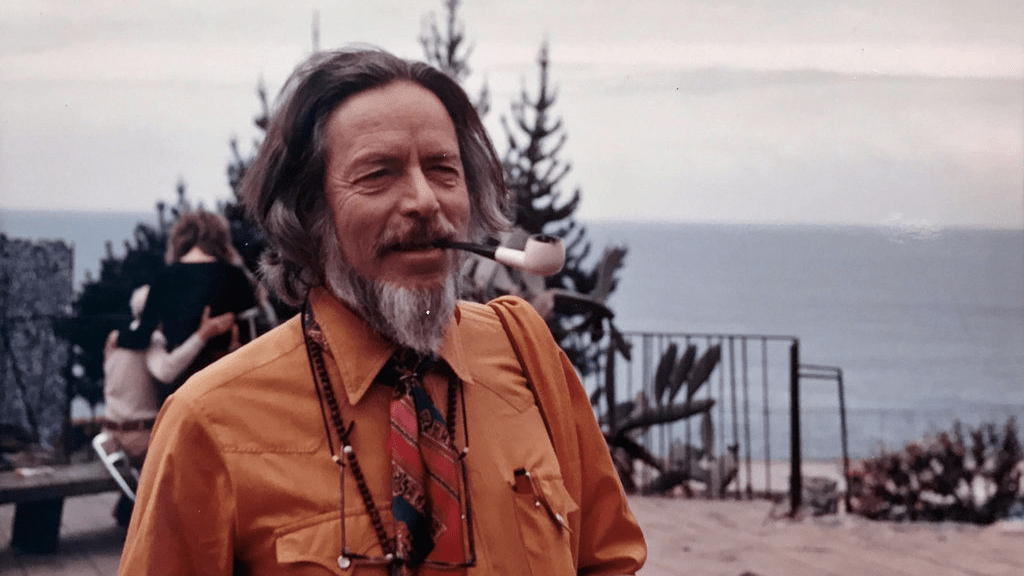
One night, alone at home, I was watching videos of Alan Watts speaking about awakened love. About why spiritually awake people struggle to fit into the modern world. His words landed softly but deeply, like someone articulating a truth I had felt but never named.
A few days later, I was meant to go to dinner with someone. By then, I had stopped expecting anything from meetings or encounters. Most things felt neutral, colorless. Still, I felt a quiet openness, a sense of curiosity.
Before going to sleep, I did something I hadn’t done in a long time.
I asked for a sign.
Not vaguely. Not poetically. Very clearly. In my mind, I addressed Baba Vanga.
She came from my region in Bulgaria. Not a distant legend, not a myth from books, but someone woven into the landscape of where I come from. People spoke about her quietly. Carefully. With a kind of respect that didn’t need explanation.
My mother had visited her when my grandmother was dying. It wasn’t curiosity that took her there. It was grief. The need to understand what could not be held or stopped. Baba Vanga spoke plainly. Without softness, without drama. She told my mother that she was carrying a child.
A girl.
My mother already knew she was pregnant. What stayed with her was not the fact itself, but the certainty with which it was said. As if it had already been seen, already placed.
For me, Baba Vanga was never about prophecy or spectacle. She represented something quieter. The idea that there are moments when knowing doesn’t come from logic or proof, but from presence. From seeing beyond what is visible. From listening beneath words.
So that night, when I asked for a sign, I didn’t ask abstractly or theatrically. I asked someone whose name already lived in my family’s most fragile moments. Someone tied to my land, my lineage, my inner language.
And I asked simply.
Please, send me a dream.
I wasn’t asking for guidance. I was asking for confirmation that something beyond me was still listening. That even in loneliness, isolation, and depression, I wasn’t truly alone. That God had not turned away from me.
The Dream
And as I fell asleep, a vivid dream unfolded. Sharp, alive, unmistakable. One of those dreams that doesn’t fade with morning light, but stays lodged in your chest.
It was so vivid it felt less like dreaming and more like watching a film unfold from the inside. Every detail was sharp. Every moment intentional.
In my dream, I was preparing for dinner with a man. Messages were going back and forth, plans forming and reforming. At one point, I told him dinner was at nine. Then, last minute, the reservation changed. Nothing dramatic. Just one of those small shifts that subtly rearranges the evening.
I was in a flat that wasn’t mine. It looked different. Unfamiliar, yet comfortable, as if I had already lived there for some time. And it was there that I realized he was my neighbor. Literally next door.
I kept seeing him through the doorway, unlocking his door, coming and going. I remember finding it funny and slightly absurd. I kept wondering whether I should tell him, Hey, do you know you’re my neighbor? The thought amused me. It felt strange in a light, almost playful way.
I never quite found the moment to say it.
As I was looking through the doorway, something caught my attention behind me. One of the drawers in the flat began to emit a bright white light. Subtle at first, then unmistakable. I noticed it before anything else happened. Before anyone arrived. As if it had been there all along, quietly waiting to be seen.
Then people broke into the flat.
They were frantic, urgent, searching with intent. They turned everything upside down, opening drawers, pulling things apart, shouting over one another. Again and again, they demanded, “Where is the book?”
Before I could respond, the drawer burst open.
From inside it, the book appeared.
It was shining with an intense white light, far brighter than the room itself. The light poured out of it, pure and blinding. I stepped forward, drawn to it, trying to look into the light. It was so bright my vision dissolved inside it. It didn’t hurt. It erased edges.
Hovering over the book was a serpent-like creature. Alien in form, sharp, unfamiliar, almost frightening to look at. And yet, I wasn’t scared. Not even for a moment. I knew, instinctively, that it was there to protect both the book and me. It positioned itself between us and the intruders, calm, vigilant, unwavering.
Then Zeyna appeared and took my hand.
She led me upward, to a high helicopter pad beneath an open night sky. Two massive helicopters stood there, engines silent but heavy with purpose.
Suddenly, everything filled with movement.
Special forces. Police. Authority.
Zeyna handed me over without hesitation. Cleanly. Quietly. They surrounded me, shouting, demanding to know where the book was. I told them I didn’t know. I truly didn’t. They forced me to the ground, restrained me, searching for something I could not give.
And then the scene cut.
He was in his apartment, watching everything unfold on television. He was wearing the clothes he had planned to wear for dinner. When he saw me on the screen, restrained and powerless, something inside him cracked open.
He screamed. Not in anger. In agony.
And as he did, his teeth sharpened. His body shifted. His form transformed. He became the same serpent being I had seen guarding the book.
And then I woke up.
With my heart racing.
With the white light still behind my eyes.
With the quiet certainty that the dream had not been random.
I checked the clock. It was 2 a.m.
Chills ran through my body. I knew I had asked for the dream, and the fact that it had arrived so clearly, so vividly, unsettled me.
It didn’t feel like imagination. It felt archetypal. Symbolic. As if something deep had surfaced before I had the language to meet it.
I didn’t try to interpret it then. But soon, I would understand its meaning.
As the day of the dinner arrived, I prepared myself slowly.
I wore a black silk dress, black patent leather heels, and silver jewellery set with cobalt blue stones. I straightened my blonde hair and ordered an Uber.
As I got into the car, the driver immediately felt kind. Calm. Open. We began talking, naturally, about God. I told him that no matter what I had been through, I always carried the faith that God was guiding me, watching over me, even when I couldn’t see how.
He told me he was Muslim. I told him I was Christian.
I said I believed God is one.
He smiled and said he believed the same.
We spoke about the goodness of God. About how He watches over all of us, even though we call Him by different names. We spoke about Jesus Christ. About Mohammed. There was no tension, no need to convince. Just recognition.
At one point, he turned to me and said,
“Sister, you have a gift. You carry a very bright light and a special energy. I want you to know you are blessed. You are blessed.”
I thanked him. And I told him the same. That he, too, carried something pure and good.
When he dropped me off at Maison Estelle, I stepped out of the car smiling. I thanked him for the beautiful conversation and left him a tip.
And I walked inside smiling.
As I sat down at the dinner table, I felt an ease settle into my body.
I wasn’t pretending to be anyone I was not.
I wasn’t performing, adjusting, or holding myself in place.
I was simply Monica.
Funny. Quirky. Full of stories.
In love with music, adventure, and life.
The girl who had been lost for the last ten months.
The girl who went through hell, and still, somehow, always found a way back to herself.
Just as in my favourite book, Women Who Run with the Wolves, there is the story of the Handless Maiden.
In the tale, a young girl is betrayed and sent away into the world without her hands.
Without hands, she cannot hold, cannot protect herself, cannot grasp what is offered to her.
She wanders through forests and trials exposed and vulnerable, surviving not through strength but through intuition, trust, and inner knowing.
Eventually, she is given silver hands so she can function in the world again.
They allow her to eat, to work, to be acceptable, to move forward.
But the silver hands are not alive.
They do not feel.
They do not belong to her.
Only after deep suffering, exile, and transformation does something miraculous occur.
Her real hands begin to grow back.
Slowly. Painfully. Naturally.
Not borrowed. Not imposed.
Her own.
I was this handless maiden.
For a long time, I wore silver hands.
Versions of myself shaped by others.
Adaptations. Compromises.
Ways of being that helped me survive, fit in, be chosen, be loved.
But I no longer needed them.
I was slowly growing back my own hands.
And as I sat there, I felt it.
A quiet knowing in my body.
The conversation flowed effortlessly.
There was no tension, no performance, no need to impress.
I felt peaceful.
Most of all, I cared for my peace.
For too long, I had sacrificed it.
Trying to please.
Trying to fit someone else’s mold.
Trying to shrink myself into shapes that were never meant to hold me.
Peace, I realized, was not something to chase or earn or negotiate.
Peace, for me, was simply being.
What a Joy It Is to Be Alive
As I woke up this morning, my friend Romina told me she hadn’t slept all night.
Her voice was heavy, the kind that carries news before words even land.
Anthony Joshua had been in a serious car crash.
He survived — injured, shaken, alive.
Two of his close friends and coaches did not.
She told me one of the men who passed was like a brother to her.
That they shared a deep friendship.
That he was a beautiful, kind soul.
That their lives were woven together by countless memories — moments that now exist only in the quiet chambers of the heart.
As I looked at the picture of the crashed car and imagined Anthony losing two of his closest people in an instant, right before his eyes, tears filled mine.
How fragile life is.
How violently it can change in a single breath.
How everything we take for granted can vanish without warning.
Shivers ran through my body.
My eyes filled with tears instantly.
Moved by this, I lifted my face toward the sun and simply felt.
Life.
Life.
Life.
How sacred it is to wake up breathing.
How grateful we are to be given another day.
How grateful we should be to give, to laugh, to love, to share.
Every day is a gift.
Every moment an invitation to ground ourselves in what truly matters.
Later, I spoke with my villa manager. She saw me smiling and asked me about my story.
And I told her the truth.
How I had been heartbroken all year.
How I had lost myself for a while.
How, at my lowest, I didn’t want to live anymore — over the man I lost.
And how now, somehow, quietly, gently, I felt happy again.
Bali — the same place that once took from me — had given me back a hundred times more than it ever took.
And I realised I didn’t need anyone but myself to be happy.
I reconnected with myself.
I shared with people.
I laughed with people.
I helped those who needed help, and allowed others to help me.
And I lived.
Every day.
Fully.
Authentically.
I showed up as myself in every situation — sometimes funny, sometimes singing, sometimes messy.
Sometimes I defended my friends like a fierce lioness.
Sometimes I was a mischievous little girl.
And through it all, I knew I was me.
I had always been me.
And I was free.
Free to live.
Free to love.
Free to be myself in every moment.
When I spoke with my hotel manager later, she told me she believed in the human soul and the universe just as deeply as I did. I shared with her how connected I feel to everything lately. To people, to nature, to life itself. How open I am to giving and receiving, without fear, without closing my heart.
As she spoke, she gently touched the plants around us, explaining how they care for them every day, how they tend to them with presence and intention, and how everything carries energy. I looked at one of the leaves in front of me, and in that stillness it felt quietly responsive. As if it was at ease. As if it was content. Not imagined, just felt.
In that moment it became clear to me. When something is nurtured with care, attention, and respect, it reflects that energy back. It grows into itself.
We both felt shivers.
She spoke of her husband, her children, and how she found a man who treats her beautifully. She wished the same for me.
I cried and told her I can’t wait to be a mother one day.
She smiled and said she knows that the next time I come here, it will be with the person I love — and who loves me.
And I know that too, with a quiet certainty in my heart.
Because when you have a big heart, no matter how many times it breaks, it does not harden.
Your love only grows deeper.
What changes is not your capacity to love —
but the way you love.
You learn to love from fullness,
not from scarcity.





 Mon’s short stories