


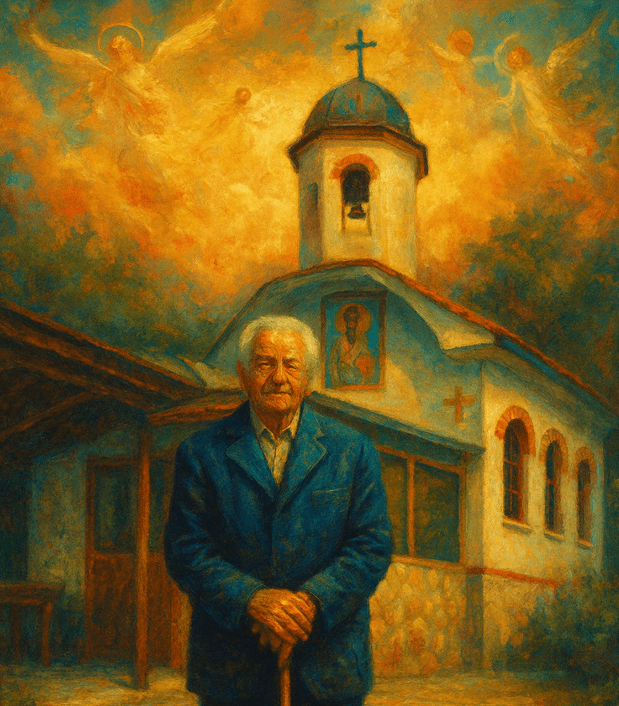
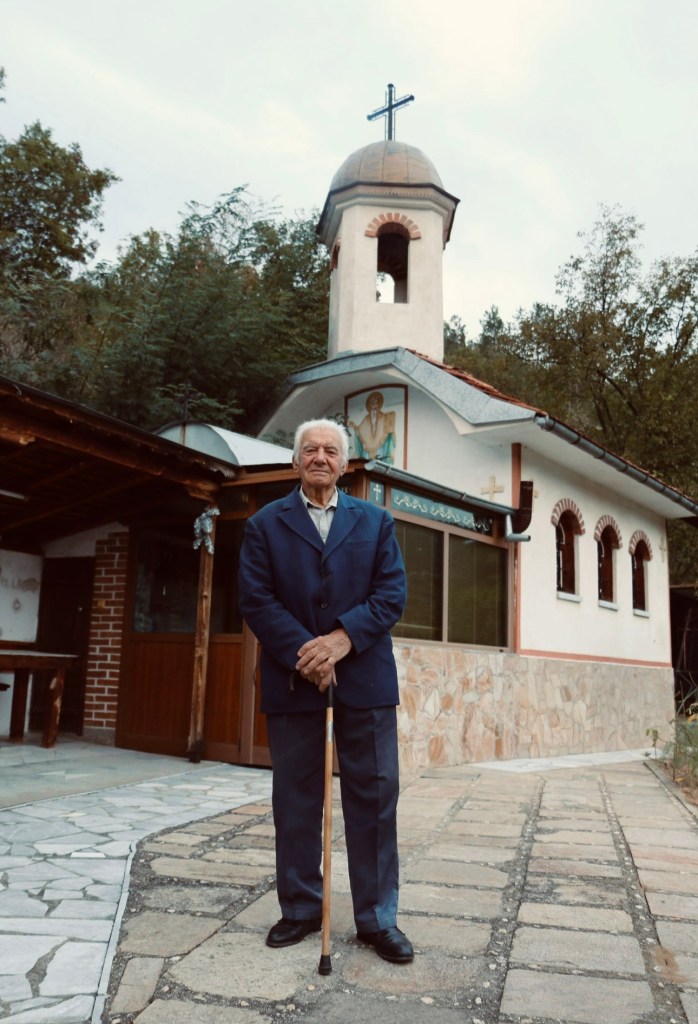
Once, in a time not so long ago, there lived a man whose presence was as steady as the earth and as radiant as the sun. He stood as a pillar of strength for his family, a guiding force for his sons, and a beacon of wisdom for his grandchildren. His name was Asen Djalev, and this man, this gentle yet unyielding soul, was my grandfather.
I remember him well—strong, commanding, with a gaze that could part the fog of uncertainty. He knew his values, and with unwavering conviction, he upheld them, never afraid to speak his truth or defend what was right. He raised his sons with a heart full of love, tempered by the iron hand of discipline. A gifted civil engineer by trade, and a humble beekeeper by passion, he was, above all, a loving father and grandfather. His life was a testament to purpose and perseverance, an inspiration that still flows through the veins of those who carry his name.
He built a country house for his family, west of the Struma River in the heart of Pirin Macedonia, a place that holds not only my grandfather’s roots but mine as well. Macedonian people are known for their fierce spirits and unshakable strength, and my grandfather, Asen Djalev, was the embodiment of this proud heritage. He was as deeply connected to the land as the people of our region, nurturing it with the same care and passion that flowed through his veins.
His connection to nature ran deep. He cared for his bees with the same dedication he brought to every aspect of his life, producing the finest honey I have ever known. The honey he crafted held a special reverence, so cherished that it became renowned throughout the region. Each harvest was a family tradition, where we helped him collect honey straight from the comb. I still remember watching, captivated, as he skillfully transformed it into liquid gold. Occasionally, we would enjoy it directly from the comb, relishing those simple, fleeting moments of unity. Bees, sacred beings in their own way, seemed to sense the purity of his spirit, as though they understood his deep connection to the natural world. His bond with the bees and the land made him unique—grounded in the earth, yet touched by the divine.
His true joy lay in the land itself. His countryside house was surrounded by gardens overflowing with life—vegetables, fruits, grapes, figs, and corn all flourished under his care. The simple pleasures of homemade food and the beauty of his land brought him happiness.
As a child, my family and I would gather around a table in the wooden gazebo that stood proudly in his garden, beneath grapevines and the fragrant shade of lemon trees. Sharing watermelon with my grandfather was a cherished tradition, almost ritualistic. With careful precision, he would slice the watermelon and hand pieces to me and my cousins, his eyes twinkling with humor. We would devour the sweet fruit, our laughter rising alongside his as he filled the air with his endless jokes. Though he was a man of formidable strength, his sense of humor was unmatched, and no one could make us laugh quite like he could.
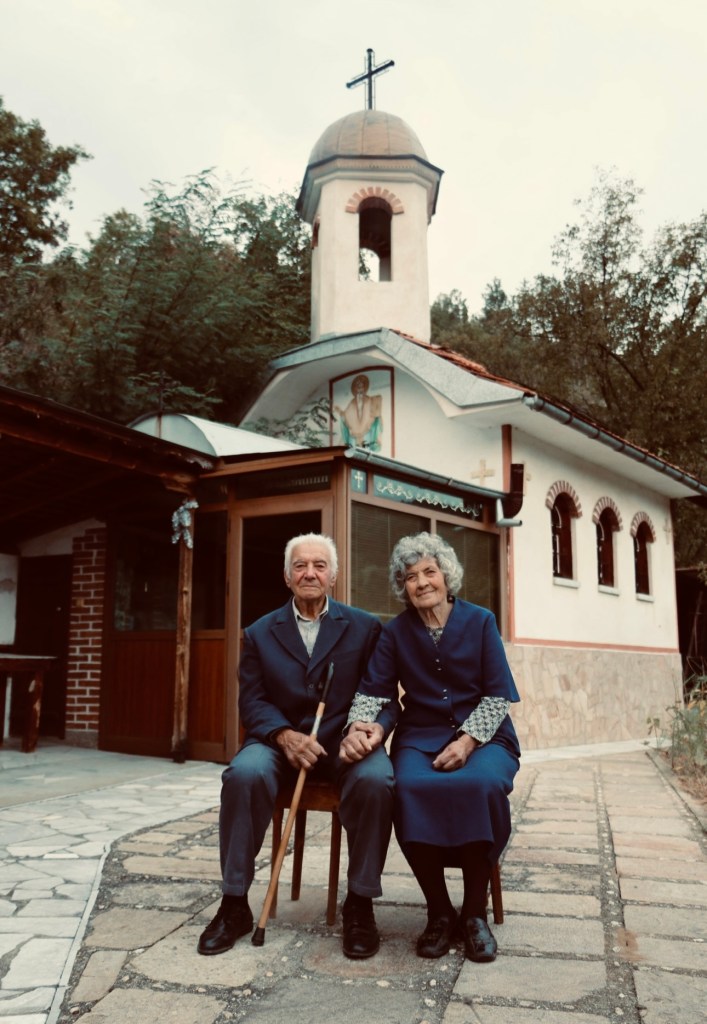
He loved to gently tease my grandmother. Sometimes, with a playful smile, he would say, “Oh woman, you’re good for nothing! You always manage to mess things up.” She would frown at him in mock displeasure, only to burst into laughter moments later, for his words were always infused with affection. Their bond was deep, a love so strong that it radiated to their children and grandchildren. After his passing, my grandmother mourned him deeply, often saying that their country house would never feel the same without him. They had been each other’s unwavering support through all of life’s challenges, standing together until the very end—true to the vow, “until death do us part.”
THE DREAM
One night, my grandfather had a dream unlike any other—a sacred vision that felt more like a prophecy. In this dream, he found himself wandering through the mystical expanse of the Rila Mountain, a place revered as the most sacred in all of Bulgaria. Rila, with its ancient forests and hidden springs, is home to the legendary Rila Monastery, a spiritual sanctuary that has stood since the 10th century. Its towering stone walls and golden-domed churches rest against the wild beauty of the mountain, where time seems to flow differently, and the divine feels ever-present.
As he walked through the thick woods, the air was alive with the sounds of nature—the songs of birds echoing through the trees, the rustling of leaves underfoot. The sun filtered through the canopy, casting a golden glow on the moss-covered ground. The deeper he ventured, the more the world around him seemed to hum with life, as if the mountain itself held secrets untold.
And then, amidst the tranquil beauty, they appeared—angels, luminous and otherworldly, their presence as gentle as it was powerful. Their voices were soft, like the wind through the pines, yet filled with a divine authority. They told him he had been chosen, that he must build an Orthodox temple, a sacred place of worship. This was to be his calling, his legacy—a task bestowed upon him by the heavens themselves.
It was more than just a dream; it was a calling, a message from the divine, delivered in the most sacred of places. The Rila Mountain had long been a symbol of spiritual awakening, and now it had revealed its purpose to him. The angels had spoken, and his path was clear—he was to create something eternal, a testament to faith and devotion that would stand long after he was gone.
He awoke from his dream in the stillness of the early morning, the clock reading 4 a.m. The world was quiet, as if it too held its breath in anticipation of what was to come. Without hesitation, he stepped outside his house, walking toward the hill that rose beneath the shadow of the mountain peaks. As he stood there, gazing at the landscape before him, a feeling washed over him—an undeniable certainty. This was the place. This was where he would fulfill the prophecy.
With unwavering determination, he began to build the Orthodox temple, starting from the very ground beneath his feet. Brick by brick, he raised its walls, crafting a place of worship with his own hands. When it was complete, he had it blessed by a local priest, and in a tribute to his love for bees, he named it after Saint Haralambos—the patron saint of beekeepers. The church became a thing of beauty, adorned with exquisite altarpieces, icons, and sacred art that seemed to glow with divine light.
The day of the church’s christening was a grand celebration. People from near and far gathered to witness the fulfillment of his vision, to see the temple that had sprung from both his dream and his hands. His legacy was sealed that day—a mark left not only in stone but in the hearts of everyone who knew him. He was a truly special man, a soul touched by something higher.
My father remembers speaking with the priest, who told him that only those truly blessed experience such dreams, such divine prophecies. We always knew he was special. His spirit, his strength, lives on within me. I feel it in the way I, too, am drawn to the divine, to the mysteries of the universe. Though he is no longer here, his presence surrounds me, guiding me as I discover my own spirituality, leaving me with the gift of his sacred touch.
In loving memory of my grandfather, Asen Djalev
 Mon’s short stories