


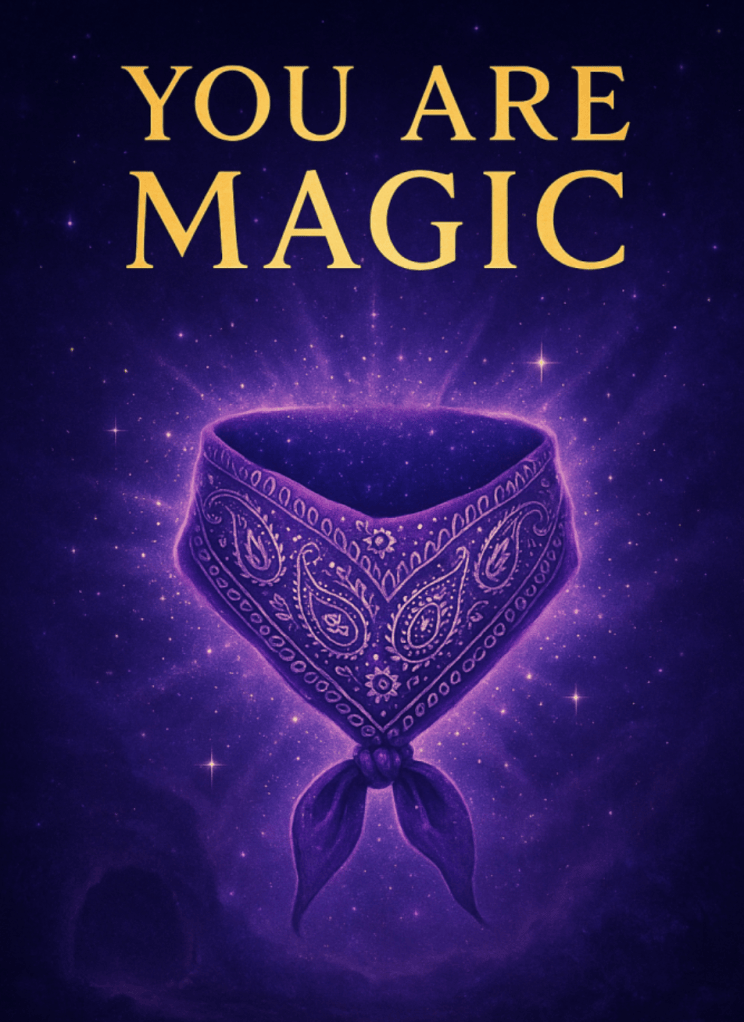
Part I – The Girl with the Purple Bandana
In the Pirin Mountains — where lilacs spilled over fences and mornings carried the scent of warm bread — a little girl was born.
In the Macedonian part of Bulgaria, where people were known for their fiery spirit, their laughter that echoed through courtyards, and their stubborn, unshakable hearts, she took her first breath — already carrying that same spark within her.
On her first birthday, her parents played the Scorpions’ “Wind of Change.” They could not have known how fitting it was — that their daughter would grow with that same restless breeze inside her, forever pulled toward freedom, music, and a life lived on her own terms.
She was never a quiet child. In her stroller, she belted Ricky Martin’s “Un, Dos, Tres… María” as though the world itself were her stage. When older kids mocked that she was too big to be pushed around, she shot back without hesitation: “Why don’t you just mind your own business?”
Music was her first language. Before she could stand on her own, she leaned against the glowing television, swaying to Greek songs, tiny fingers fumbling to snap in rhythm. Wobbly, unsteady — yet already carried by melody, already dancing with life.
And fittingly, her very first English word was heart.
She did not learn it in a classroom, not from chalkboard lessons or grammar drills. No — it came from the voices of five boys singing through a battered cassette player in her family’s living room.
The Backstreet Boys. Shape of My Heart.
The word leapt out, lodged itself in her tongue, and would not let go. She repeated it again and again, as though her soul already knew: her life would always orbit around that one word.
Heart.
💜
When she was three, her mother tied a small purple bandana around her head. The cloth was basic, the kind sold at the marketplace in stacks of bright colors, but on her, it transformed. She wore it as if it were a crown. She paraded through the town with it, her blonde hair tumbling beneath, her eyes wide and searching.
The purple bandana became her talisman. Whenever she tied it on, she was no longer just a quiet little girl — she was a queen, an adventurer, a performer.
She climbed onto chairs in the kitchen and sang Toni Braxton with a seriousness that startled the adults. Her voice was not polished, not yet trained, but it carried something raw — a depth too large for such a small body. When she danced, she did not care who was watching. She moved as if the music were a river and she had no choice but to follow.
💜
One summer afternoon, the town square filled with sound. A Native American band had come to perform — a rarity in that small Bulgarian city. Their drums thundered, their flutes cried into the air, their voices rose like prayer.
The crowd pressed in tightly, shoulder to shoulder, adults craning their necks, children tugging at their mothers’ skirts for a better view. Somewhere in the crush, the little girl — still tiny, still hidden beneath taller bodies — felt the music pulling at her chest.
Something in her ribs recognized the pattern before her mind did. The thunder of the drums stitched itself to her heartbeat, and she felt an ancient kinship — as if her bones remembered gatherings she had never attended, fires she had never sat beside. It was a call older than language. Years later, when she began to expand into house music, she would find the very same spine of rhythm there: the four-on-the-floor like a distant war drum, shakers like summer insects in the dark, handclaps like circles around a flame. She started layering tribal percussion and vocal chants, chasing that first square’s thunder, discovering that prayer can become pulse, and pulse can become dance.
She did what came naturally. She wriggled through the wall of legs, ducking under elbows, until she reached the very front. She was so small she could almost touch the drums.
She lifted her hands high, her purple bandana slipping down over one eye, and shouted with the conviction of someone who had never doubted herself:
“I need to dance.”
The drummers paused. A ripple moved through the crowd — a murmur, a laugh, a wave of surprise. Who was this child, so small, so bold?
Then the drumming began again, and she danced.
Not the careful, rehearsed movements of a trained child, but wild, free, unafraid. Her feet pounded the stone, her arms cut through air, and she danced as if no one was watching.
The crowd clapped. The strangers cheered. Some even bent toward her mother, their eyes wide with something like awe.
“Your daughter is special.”
And she was. From the very beginning.
💜
That night, when she lay in bed with the purple bandana still knotted around her head, she whispered the word she loved most — heart — and fell asleep believing the world itself was alive, waiting for her to dance again.
Part II – Numbers as Spells
School, for most children, was a place of order — desks lined up like soldiers, chalk squeaking across blackboards, the air heavy with dust and impatience. But for her, it was more than that. It was a portal.
From the moment numbers appeared before her, they felt alive. Equations weren’t dry commands; they were riddles whispering secrets. Addition sounded like rhythm. Geometry looked like art. Probability danced like music.
When she solved a problem, it wasn’t obedience — it was revelation.
Her parents noticed. Teachers noticed. The little girl in the purple bandana, who once shouted for drums, now sat silently at her desk, devouring numbers the way she once devoured songs.
💫
Word spread. In Bulgaria, talent did not go unseen. Soon she was sent to study with Katyusha, a brilliant Russian teacher with sharp eyes and a voice like steel. Katyusha was the kind of woman who bent no rules, who sliced through excuses like glass.
Most children feared her.
But the girl did not. She admired her. Because under the harshness, she sensed the truth: Katyusha could see her.
Lessons were rituals. A long wooden desk, the smell of sharpened pencils, the ticking of a stern clock. Katyusha would scrawl problems across the board — brutal, intricate, designed to break lesser minds.
But to the girl, they looked like puzzles. She leaned over her paper, blonde hair falling across her face, her pencil scratching like a needle on vinyl. Her mind flew. Equations unfolded not as commands but as patterns. She saw shapes others didn’t, shortcuts invisible to most.
Katyusha’s lips would twitch, almost a smile, as she nodded. “Хорошо,” she would say. “Very good.”
💫
Soon came the great honor. Out of the whole country, only twenty-nine children were chosen for the national program. A number everyone dreamed of. A number her parents barely dared to whisper.
And yet — she was among them.
At the ceremony, when the list was read aloud, her name shimmered in the air. She felt her pulse in her fingertips. Her family’s pride pressed heavy on her shoulders, but in her chest was something lighter, stranger: a knowing.
It wasn’t just that she was good at numbers. It was that numbers themselves had chosen her.
From that day forward, she carried the weight of expectation — but also the thrill of possibility.
Part III – Strings of Fire
Her father’s world was made of sound. In their home, records spun, cassettes hissed, guitars leaned patiently in corners. He loved rock — the kind of music that roared from the bones of the 70s and 80s, carried on leather jackets and long hair.
She, still a child, wrinkled her nose at it.
“Old people’s music,” she teased him, laughing.
Her father only smiled. He knew. One day, she would understand.
💫
That day came like lightning.
The first notes of the Scorpions poured through the room, raw and haunting. And then came Manowar. The song was Heart of Steel.
Born with a heart of steel.
The lyric pierced her. She froze, transfixed, as though the words had been written not by strangers in America, but for her — the girl whose very first English word had been heart.
Something shifted inside her. She was no longer teasing. She was listening.
💫
“Papa,” she said at last, her eyes wide, her voice steady.
“Your guitar is not boring after all. I want to learn.”
He raised an eyebrow, half skeptical. “It’s not easy.”
“I don’t care.”
And she didn’t.
💫
At first, he taught her a few simple chords on his acoustic guitar. Her fingers ached. Strings bit into her skin until small grooves carved themselves into her fingertips. But she didn’t stop. The pain was proof. The sound — even the rough, clumsy sound — was worth it.
She sat for hours, strumming, fumbling, starting again. The same few chords over and over, until her fingers were raw, her nails broken, her small body vibrating with stubbornness.
Her father would pass by the room, arms crossed, pretending not to watch too closely. “Enough for today,” he’d say. But when she looked up at him, there was a shadow of pride in his eyes.
The lessons at the conservatory — where other children learned classical pieces, note by note, like dutiful soldiers — couldn’t hold her. She wasn’t meant to follow the lines. She wanted her own sound, her own rhythm, her own way of pulling fire out of wood and string.
💫
Soon she discovered Blind Guardian — the German band whose music was not merely music, but story. They sang of hobbits and dwarves, of Odin and Valhalla, of Valkyries descending with fire in their wings. Their songs were portals into fantasy, echoes of the Scandinavian myths she devoured in secret. Each track was a journey, each chorus a spell.
The very first song she ever learned to play on guitar was theirs — The Bard Song. A hymn to wandering musicians, to bards who carried tales and truths from fire to fire. The chords were simple, but every time she strummed them she felt as though she too was part of that lineage, a young bard with her own story to sing.
When Blind Guardian came to Bulgaria, she was fourteen. She and her father stood among the crowd, hearts racing as the music surged around them. And afterwards, as if fate wanted to seal the moment forever, they met the band’s guitarists.
Her voice trembled, but she spoke her truth: “I started playing because of you.”
They smiled, humble and kind, their brilliance softened by warmth. They thanked her as though she had given them a gift, when in truth they had given her everything. That night imprinted itself on her soul — proof that greatness could be both powerful and gentle, that music could be both myth and kindness.
💫
One evening, after hours of practice, she lowered the acoustic and looked at her father.
“I want an electric one.”
He frowned. “I’m not sure. I don’t know if you’ll give it the time.”
Her chin lifted. “I will.”
Still, he hesitated. So she made him a promise: if she could prove herself, he would have to believe her.
💫
The next weekend, they walked together into the music shop. The walls were covered with instruments, their polished bodies gleaming under fluorescent lights, amplifiers humming faintly in the corners. To her, it felt like entering a temple.
The shopkeeper, a heavy man with careful eyes, asked if he could help.
“My daughter wants an electric guitar,” her father said. His voice carried both skepticism and challenge. “But I don’t think she’s ready.”
The shopkeeper looked down at her. She was small, blonde, still almost a child. He handed her a guitar anyway.
Her hands shook as she plugged it into the amp. The cord snapped, the air filled with quiet static. For a moment, the shop was silent. Then she began to play.
Not perfectly. Not smoothly. But with passion — raw, unfiltered, unstoppable. Her fingers moved with the urgency of someone who needed this more than anything.
The shopkeeper’s eyes lit up. He reached into his pocket, pulled out his own worn guitar pick, and placed it in her palm.
“Your kid is brilliant,” he told her father.
💫
That day, she walked out of the shop with her very first electric guitar: a black Ibanez that gleamed like obsidian in her hands. It was more than wood and strings. It was a symbol. Proof that fire inside her could be trusted.
When she strummed it at home, the walls trembled. Her father grinned, shaking his head. She wasn’t teasing him anymore. She was joining him.
From then on, music wasn’t just a hobby. It was a path. A voice. A mirror of her soul.
Part IV – The Machine and the Dream
The guitar gave her fire, but another kind of magic was waiting — quieter, colder, lit by the glow of a screen.
Her parents brought home a bulky computer, a white tower with whirring fans and a monitor that buzzed faintly when you touched the glass. It was Windows 98 – a world inside a box.
The moment her small fingers touched the keyboard, something clicked. She was no longer just a girl in a purple bandana. She was an explorer, a builder, a sorceress learning to command light.
At first, it was games. Hours vanished as she steered pixelated characters through dungeons and castles. She loved fantasy, mythology and she escaped in those worlds, broadening her imagination, dreaming of elves, castles and sieges. But soon a new thought entered her mind: I don’t want to just play. I want to create.
💻
At thirteen, her love for music met her love for the machine. She adored Rihanna — her songs looping endlessly through her headphones — and decided the singer deserved a kingdom on the internet.
She didn’t ask anyone how. She opened a blank page and began. Line by line, she taught herself HTML, CSS, PHP. The screen became her canvas. Code became her paintbrush.
Weeks later, the site was alive — colorful, full of pictures, words, and rhythms that reflected her devotion. Other fans found it. They left messages, praises, questions. She answered them with pride.
Then came the unthinkable: the official Rihanna fan site discovered her work. They reached out.
“We’d like you to join us as one of our administrators.”
She was only thirteen. She said yes immediately. Not for money, not for fame, but for the pure joy of being trusted to create something real.
💻
At fourteen, the lesson deepened.
Her family had taken her to Disneyland Paris. Somewhere between the parades and rides, she lost her phone. It wasn’t the first. In fact, it was the third she had misplaced.
Her father’s patience ran dry. “That’s it,” he said. “I’m not buying you another one.”
Most children would have sulked. But she, with her purple-bandana spirit still alive inside, squared her shoulders. “Fine,” she said. “If you won’t buy it for me, I’ll buy it myself.”
💻
Her father was running a real estate development business. Through one of his agents, she made a bold offer:
“I will build you a professional website. Every property, every detail, presented perfectly.”
The agent blinked. She was a young teenager. “Can you really do that?”
“Yes.”
And she did. She spent nights bent over the glowing screen, teaching herself new tricks of design, adjusting layouts until they looked polished, storing the agent’s properties in a curated database, making sure every detail was correct.
When the site was finished, it was the kind of work that an adult developer would have been proud to sign.
She was paid her very first wage. She took the money, marched into the store, and bought herself a brand new phone.
She returned home, placed it on the table in front of her father, and smiled.
“See? If you won’t, I will.”
💻
It wasn’t just about the phone. It was a spell, a transformation. She had turned talent into independence, imagination into reality.
Magic, she realized, wasn’t about waiting for things to appear.
Magic was about creating them with your own hands.
💻
The endless hours spent on coding took a toll on her vision.
Her parents noticed before she did — the way she leaned closer and closer to the monitor, the way she squinted, the way her eyes burned after long nights of code and bright pixels. They ordered special protective glasses from Germany, lenses meant to shield her from strain. She almost never wore them, as she thought “they don’t look cool enough”.
There was a softness in her vision already, something inherited. Nearsightedness lived in her blood. And the more she poured herself into the machine — into building, creating, learning — the faster it worsened.
Eventually there was no pretending anymore.
She needed real glasses.
They chose a pair for her: pink frames, warm and ember-bright. Sweet. Gentle. A little magical. When she put them on at home, she could finally see clearly again. The world snapped into focus.
But at school, clarity became a weapon.
She walked into class wearing them, books hugged to her chest. The moment she sat down, the whispers started. Then the laughter. Then the words, sharp and childish and somehow already cruel:
“Look at her. The pink-glasses nerd.”
The sentence was nothing, and it was everything.
Heat flooded her face. Her shoulders folded in on themselves. She tried to disappear into the chair, shrinking, hiding, making herself smaller and smaller until she could almost believe she wasn’t there at all.
She had always been fierce . But even fire is tender when it’s young.
Their words didn’t just sting. They shaped.
They pressed against her, molding the edges of who she was allowed to be. Too nerdy. Too soft. Too different. Too much.
And so, piece by piece, she began to tuck parts of herself away.
She stopped raising her hand so often.
She stopped letting her excitement spill out.
She stopped wearing the glasses unless she absolutely had to.
It wasn’t the first time they had mocked her.
It would not be the last.
But it was one of the first moments she learned this truth: the world punishes what it does not understand, and it calls that punishment normal.
And even then — even as a child — she felt the first crack of it:
the quiet betrayal of having to dim in order to survive.
Part V – The Body and the Fight
For all her gifts with numbers and machines, her body at first betrayed her.
In school, sports days were torture. She was always among the last to cross the finish line, her breath ragged, her legs heavy, her face hot with shame. She looked at the girls who ran like wind, their braids flying behind them. They laughed easily, as though victory cost them nothing.
For her, defeat tasted like dust.
But she hated losing. Not because she craved medals or applause, but because something inside her refused to accept weakness as destiny.
🥋
She found her answer in a small, padded room that smelled of sweat and discipline: a Taekwondo dojo.
The first classes nearly broke her. The uniform felt stiff, her movements clumsy. Every kick was awkward, every stretch painful. She left drenched in sweat, her muscles trembling, her throat aching from holding back tears.
Her mother expected her to quit. Many children did. But the girl who once stood in the town square and declared, I need to dance, now told herself: I will not stop.
And she didn’t.
Day after day, she showed up. She kicked until her legs bruised, punched until her knuckles stung, stretched until her body yielded.
Slowly, something changed. The awkwardness fell away. Her body began to listen. Her kicks grew sharper, her stances firmer, her movements fluid.
What she once feared, she now craved. She begged her mother to take her to the next class, and the next, until Taekwondo was no longer an obligation but a heartbeat.
🥋
After a year, she returned to school races. The girl who had once stumbled at the back now ran like lightning. She became the fastest in her class, the one who leapt the furthest, the one who startled teachers with her transformation.
The victory was sweet, but the real prize was deeper. She had proven to herself that she could change her own story.
🥋
For four years she devoted herself to Taekwondo. The principles etched into the art became her compass:
• Courtesy — to bow with respect, to treat even opponents with dignity.
• Integrity — to face herself honestly, even when it hurt.
• Perseverance — to never give up, even when bruised and trembling.
• Self-control — to master her impulses, to direct her fire instead of being consumed by it.
• Indomitable Spirit — to rise again, no matter how many times she fell.
She didn’t just learn how to fight. She learned how to endure. How to channel her fire. How to trust her own resilience.
🥋
Even after she stepped away from the dojo, the lessons remained. In every challenge that came later — in boardrooms, in love, in heartbreak — the echo of Taekwondo whispered through her:
Fall if you must. But always rise.
🦋
High school was the first place where the world began to test her softness.
Her class was full of girls — glossy-haired, perfume-scented, fluent in the new language of makeup, boys, and belonging. They were kind enough at times, but they lived by rules she didn’t understand. They moved through those halls like they had already learned how to be women.
She was different.
Girly, yes — she loved dresses and colors and laughter — but also dreamy, curious, a little nerdy. Her joy still came from books and music, from stories and numbers. But in those years, difference became danger. And slowly, piece by piece, she began to trade fragments of herself for acceptance.
One afternoon, a girl turned to her and laughed.
“You’re thirteen and haven’t even kissed a boy? Pathetic.”
The words were meant as a joke, but they landed like a knife. That night she lay awake, thinking of all the movies she had seen — the ones where love was tender and slow, where a kiss was the moment when magic bloomed.
She remembered The Princess Diaries, how Mia had raised one leg when she kissed her prince by the fountain. That’s how it’s supposed to be, she thought. A leg in the air. Music in the background. A little spark of forever.
So she went and found a boy — awkwardly, nervously, wanting to belong.
But real life wasn’t a movie.
When he kissed her, there was no fountain, no music. Only hands that wandered where they shouldn’t, and a feeling that made her stomach twist. She pulled away, confused and shaken.
That night, she went home and cried.
“This wasn’t romantic,” she whispered into her pillow. “I didn’t raise my leg.”
The next day, she went to her grandmother’s house. Her parents were separated by then, and she needed someone to talk to. Her aunt found her curled on the sofa, eyes swollen. Gently, she asked what had happened.
The girl told her everything — the teasing, the kiss, the disappointment. Her aunt listened, then smiled sadly and said, “There will be other kisses, sweetheart. Better ones. The first is rarely what we dream it to be.”
But still, it hurt.
Something had cracked — a thin glass pane between childhood and the world beyond it.
Later that night, she played La Vie en Rose. The melody drifted through the house like a ghost of innocence. And as she listened, she realized: this was life’s first slap. The moment the rose-colored glasses began to slip.
Yet even through the sting, her heart stayed soft.
She still believed in magic, in tenderness, in stories where love was gentle.
Because some girls lose their illusions and turn to stone.
But she — she simply learned to dream with her eyes open.
🦋
There were other heartbreaks — quieter than love, but just as wounding.
By thirteen, she had fallen in love again — not with a person this time, but with creation itself.
With code.
With the feeling of building something from nothing, of watching light and logic bloom from her fingertips.
That year, she began entering competitions. At first, she won. Small victories — certificates, applause, a sense of pride. But then came the national round. The one that mattered.
For two weeks she worked relentlessly. Every evening, her small bedroom glowed with the blue light of the screen as she built her masterpiece — an elegant, complex website unlike anything her classmates could imagine. It had a dark theme, futuristic graphics, and a rhythm to its layout that mimicked the gaming sites she adored. She edited every image, aligned every pixel, and tested every animation until it felt alive.
By the time she was done, her website wasn’t just a project. It was a portal.
💻
The day of the competition arrived.
A large hall. A long table for the judges. A big screen where each participant’s work would be projected for all to see. Rows of parents and children filled the seats — nervous energy humming like static in the air.
Her mother and father sat in the front row, side by side for once, their faces glowing with pride.
When her turn came, she walked to the stage, heart hammering in her chest but her back straight. She plugged in her flash drive, opened her project, and the dark interface filled the screen — sleek, cinematic, unlike anything that had been shown before.
The room fell quiet.
She began explaining her process — the layout, the animations, the image optimization, the code that made everything move. Her voice shook at first, then steadied. This was her world; she knew every line, every pixel.
And then —
A man on the judging panel interrupted. He smirked.
“Let me stop you there,” he said. “You didn’t design this.”
She froze. “Of course I did.”
He leaned back in his chair, almost amused.
“Then tell me — who helped you? Your father?”
“No one,” she said firmly. “Ask me anything you want.”
He looked over the audience. “Could the father please stand up?”
Her dad rose slowly, confusion and pride twisting on his face.
“There’s no way a thirteen-year-old built this,” the man continued. “We have to be realistic.”
She felt her throat close.
The words hung in the air like a verdict.
And just like that — they disqualified her.
💻
Her parents argued, but it didn’t matter. The decision had already been made.
She sat in silence, eyes burning, staring at the floor. Not because she lost — but because she had been seen and not believed. Because the thing she had poured her heart into had been called impossible.
That day she learned one of life’s crueler lessons:
sometimes brilliance in the hands of a girl looks like a threat.
💜
Later that night, at home, her father told her quietly, “One day, they’ll understand what you can do.”
But she already knew.
She didn’t need their approval to know who she was.
Part VI – The Shadow House
London.
She had crossed borders to chase a dream, leaving behind the Bulgarian town where the bandana girl first learned to dance. The city was vast, indifferent, full of steel and glass, but she carried her own light into it.
She studied computer science — a discipline others found dry, mechanical, soulless. But to her it was alive, like mathematics once had been, like music. Code was rhythm. Logic was structure. Systems were songs.
The nights were long and brutal, assignments swallowing hours until dawn pressed pale against her window. Many around her dropped, struggled, bent under the weight of the work. But she refused. She pressed on with the same stubborn fire that had carried her through Taekwondo bruises and guitar-calloused fingers.
And at last, she stood among the few: graduating with first-class honours from one of London’s top universities.
It was victory. Proof that the child who once solved equations under Katyusha’s stern eye had grown into a woman who could master machines as easily as she mastered sound.
It opened doors. It gave her her first true place in the world of finance and technology. She was no longer just a girl of fire and rhythm. She was an engineer of futures, a builder of systems.
And that path led her into the gleaming towers of J.P.Morgan where ambition buzzed through every floor like electricity. She was still so young, a blonde girl in bright pink amidst dark suits and navy ties. People underestimated her at first glance — until she opened her laptop and filled the air with codes and plots that bent numbers into shape.
🦋
J.P. Morgan was a world of glass towers and quiet competition, where every graduate arrived eager to prove themselves. That year, they were given the ultimate test: an algorithmic trading hackathon. Three hundred graduates were divided into twelve rooms, five teams in each. One team from each room would rise as champion, and in the end only twelve would stand on stage, their algorithms set to battle in real time.
The 300 participants were split across ten rooms, each with five teams of six members. Every day, a ten-minute trading simulation ran — a fast, intense burst of strategy and reaction. Market share and performance were evaluated at the end of each run, and over the week, results accumulated. At the end of the week, the final simulation in each room determined which team would advance to the final.
Some days, other teams outran hers, capturing a larger share of the simulated market. She couldn’t stand it. When her teammates tried to calm her — “It’s just a game, we do it for practice” — she shook her head, determined. “No, guys. We have to win.”
She led her team.
For days and weekends she worked relentlessly, her eyes locked on the glowing screen, the weight of the challenge pressing but never breaking her. She wrote the algorithm herself — a trading strategy that didn’t just react, but anticipated. It priced both sides of the market dynamically, calculating risk and reward faster than any competitor. Her code wasn’t just functional. It was alive, pulsing with the same rhythm she once felt in mathematics, in music, in every act of creation.
What she built was more than a market maker — it was an adaptive organism, a dynamic algorithm designed to treat each incoming request for quote as a unique negotiation. Each counterparty, each bot, was evaluated independently, their behavioural fingerprints analysed in real time. Preferential coefficients adjusted on the fly, rewarding reliable flow and penalising toxic or fleeting liquidity.
The system balanced aggression with caution, expanding or contracting its spreads in response to volatility, inventory, and capital constraints. It didn’t just follow preset limits; it understood them, adapting its appetite to the shape of the market while never breaching its defined risk envelope. Every adjustment, every fill, every heartbeat of the strategy was logged and reported seamlessly to a regulatory service, transparency woven into its very architecture.
Even under pressure, it maintained composure — holding position, scaling back when risk grew dense, striking when opportunity shimmered. It traded competitively, intelligently and instinctively.
The judges in their room noticed her intensity and were amused. Her focus was palpable, almost intimidating. When the final simulation ended, the results spoke for themselves: her team topped the chart. They had won their room and secured their place in the final.
The day of the final came. All twelve finalists stepped onto the stage of the J.P. Morgan Auditorium, laptops open, code ready. Hundreds of employees filled the seats. Judges, mentors, and senior managers leaned forward, waiting.
Her team was called “Extra.” The name had started as a joke — a half-serious comment about how she always pushed everything a little too far: extra lines of code, extra hours, extra intensity. But over time, the name stuck, and it began to mean something more.
They all gathered around their screens, excitement and nerves mixing in the air before the final simulation. “You should be the one to run it,” they told her. “It’s your code.”
She smiled faintly, trying to hide the tension building in her chest. They knew her too well. “Just promise you won’t change anything last minute,” one of them said, half serious, half laughing. The others joined in, nodding.
It was a fair warning. In every previous simulation, the moment their market share started to slip, she would instinctively dive back into the code — tweaking parameters, adjusting logic, chasing that perfect edge in real time. She couldn’t help herself; it was her way of fighting back.
This time, though, they wouldn’t let her. “Hands off the keyboard once it starts,” someone said. “We’re watching you.”
She laughed, the tension breaking for a moment. “Fine,” she said, raising her hands in mock surrender. “If I even touch it, tie my hands to the chair.”
They all laughed, but beneath the jokes, they could feel it — the gravity of the moment, the pride, the unspoken trust that somehow, together, they’d built something that could win.
The countdown began.
Three. Two. One.
The simulations roared to life. Algorithms fought each other, placing bids and offers, pricing markets at speed. On the giant screen, market share percentages shifted like a tide. Competitors clawed for space, trying to outrun one another.
And then, her algorithm surged.
It didn’t just win trades — it dominated. Quote after quote, it cut through the competition, adapting, adjusting, moving faster than anyone else’s.
One of the senior managing directors leaned forward in his seat, half-joking into the microphone.
“Impressive lead… but let’s see what happens. Maybe they’ll catch up?”
Without missing a beat, she smiled, her voice steady.
“They’re not going to catch up with me.”
Laughter rippled through the auditorium, but she didn’t flinch. She meant it.
When the simulation ended, the numbers were impossible to ignore: her code had captured 50% of the market share. One graduate among hundreds, one algorithm among dozens—and hers had left them all behind.
Applause filled the room, but the moment wasn’t finished. With her team beside her, she stepped forward and began to explain her design — not with flash or theatrics, but with the quiet authority of someone who had lived inside the code.
She walked the judges through the architecture: how she’d modularized the strategy into independent pricing and risk components, each communicating through lightweight asynchronous channels. Each incoming request for quote was handled by its own thread, isolated yet coordinated through a shared state manager that enforced inventory and risk constraints in real time.
She described how the algorithm priced each quote dynamically — taking into account volatility, order flow toxicity, and short-term inventory deltas — while continuously adapting its aggressiveness based on latency and counterparty behavior.
The judges’ questions came sharp and fast.
“How do you prevent deadlocks in the asynchronous handling?”
“We use non-blocking queues and a lock-free design,” she replied, “so message passing stays event-driven. The only locks we maintain are atomic counters for position tracking.”
“What about concurrency in price updates?”
“A separate quote management thread handles that — it snapshots state changes and updates across cores using a shared-memory ring buffer. No thread ever waits.”
She explained how her risk engine monitored exposure in microseconds, and how a regulatory reporting module mirrored every action to a compliance log, ensuring transparency without slowing execution.
Her voice stayed steady, precise. Each answer revealed a system that was both elegant and engineered for battle — performance-tuned, fault-tolerant, and relentlessly efficient.
By the time she finished, the room was silent again — not from indifference, but from recognition. They hadn’t just seen a trading bot. They’d seen a mind at work.
When the judges announced the result, there was no doubt. Her team had won.
The girl who once solved puzzles under Katyusha’s stern eye, the teenager who built websites in her bedroom, now stood in the heart of J.P. Morgan, leading a team, commanding an audience, proving her fire in the purest way possible: by outthinking everyone in the room.
And for a moment, standing under the lights, she felt unstoppable.
🦋
And she continued on her career journey.
It was here that she met P.
He was older, nine years ahead, already a manager. To her eyes, he seemed like a man who had made it: intelligent, confident, established. He carried the weight of success, and in his gaze she saw something that both unsettled and intrigued her.
At first, he pursued her with intensity. His attraction was obvious, almost overwhelming. For her, inexperienced and innocent, the attention felt like gravity. She mistook his persistence for destiny.
She thought: This must be love.
🌑
In the beginning, he played the part well — charming, attentive, full of promises. But shadows creep quietly. Soon, cracks appeared: half-truths, small lies, absences that stretched too long.
And then the revelation: another woman. Older. A betrayal that sliced through her innocence like glass.
Her first instinct was to leave. She told him no. She tried to run.
But he followed. Tears in his eyes, words spilling like rehearsed lines: You’re the best girl I’ve ever met. Don’t leave me. Please.
Fear whispered in her ear: What if you never find someone like him again? What if this is the best you’ll ever have?
And so she returned. Not out of trust. Not out of love. Out of fear.
🌑
They moved in together. He bought a house, solid and respectable. She turned it into a home.
Every wall bore her touch. The conservatory glowed with her paintings. Corners breathed with plants. Light caught on vases and fabrics she had chosen with care.
She cooked as if each meal were an offering: brunch boards of avocado and burrata sprinkled with seeds, roasted peppers stuffed with cheese until they burst, steaming trays of moussaka, vine leaves wrapped around rice and herbs. She hosted dinners where wine flowed and laughter filled the rooms, creating warmth that masked the cold beneath.
Guests left thinking: What a perfect home. What a great couple.
But they didn’t see the shadows stretching in the corners.
🌑
His lies grew more subtle, his moods sharper. Words turned into weapons. Sometimes his hands followed.
She became vigilant. She developed a sixth sense, reading his face, scanning his phone, listening for silences in his voice. She found the truth again and again, but truth did not heal. It consumed her, hollowed her, turned love into paranoia.
The house became a stage: beauty in the daylight, tension in the dark.
🌑
Yet even here, she discovered pieces of herself.
She discovered the joy of creation — not only in code, not only in paintings, but in life itself. She could take bare walls and turn them into beauty. She could feed guests and make them feel cherished. She could host laughter even in a house that held sorrow.
And then she discovered her greatest passion — skiing.
The first time she stepped onto skis, fear rattled through her bones. The mountain loomed too vast, too steep, and gravity seemed eager to swallow her whole. She tumbled, folded, and fell again and again. But she was stubborn. Each time she told herself: I will not stop until I become great.
It became an addiction. She went skiing four times every winter, staying on the slopes until her legs ached with pain. At first, she longed for elegance — not just to slide down a hill, but to carve the snow cleanly, gracefully, leaving behind lines that felt like art. So she began repeating drills, watching and imitating the professionals. Lessons had meant little after the basics; her true education came from chasing those better than her, from sheer practice and relentless determination.
Over time, fear turned into freedom. On black slopes, she carved lines like signatures. She pushed herself into freeriding, even when others said she wasn’t ready. Forests, hidden trails, steep hills — nothing stopped her. She rode with friends who lived for the mountain, one of them sixty years old, proof that passion had no age.
Adrenaline surged through her veins, her body answering the mountain with grace. And in those moments, flying down through snow and wind, she remembered who she truly was: untamed, alive, unstoppable.
🤍
There came a time when the slopes were no longer enough. She wanted to fly.
At the freeride park stood two great jumps, carved out of the snow like challenges waiting to be met. One after another, they rose high, the kind of jumps only seasoned riders dared to take. She went there anyway.
The first attempt — she fell.
The second — she crashed harder.
The third — the mountain threw her down again.
From the lift above, a ski instructor and a freerider watched her struggle. When she climbed back up once more, determined to try again, the instructor slid over.
“There’s something I see about you,” he said. “No matter how many times you fall, you go back. You know what that shows me? You have heart.”
Then he leaned closer, sharing the secret.
“Hold your legs tight. Build as much speed as you can. And when you reach the top of the jump — pop. Release that tightness. Trust it.”
She nodded, took a breath, and went for it. Speed carrying her, legs braced, she reached the lip of the jump, popped — and for the first time, she was in the air.
She landed. Then tried again. And again. And again. Until at last, she was not falling anymore — she was jumping.
And in that moment, she learned something greater than technique: that courage is not the absence of fear, but the stubborn refusal to quit.
🌑
Her relationship with P. only got worse with time. Five long years passed. Five years of dimmed love, of vigilance, of shadows. Five years of shrinking herself, of not being able to express her personality freely, of trying to fit in a box where she did not belong.
Eventually, she gathered her strength, the same strength that once made her the fastest runner in school, the same strength that carved lines into mountains.
She walked away.
No fireworks. No drama. Just the quiet closing of a door.
The house she left behind was both cage and temple.
P. was both shadow and teacher.
The years were both wound and foundation.
And she carried them all into the next chapter of her life.
Part VII – The Wolf Woman
When the house of shadows finally fell behind her, she felt hollowed out. Five years of mistrust and bruises had marked more than skin; they had thinned her spirit. She was free, yes—yet frightened.
The unraveling had started before she left. She and P. had already agreed to end things, but the calendar still held their plans: New York first, then a friend’s wedding in Costa Rica, and afterwards her own stop in Mexico. She went anyway.
In Manhattan she moved through glass and rush-hour wind in perfect armor—hair smooth, blazer sharp, a smile that photographed well. By day she worked from J.P. Morgan’s offices and traded hellos with people who remembered her. By night she walked the avenues alone and felt nothing but the echo of an emptied room inside her chest. Panic came in small, sudden sieges—the breath shortening, the mind flashing back to the worst of it. She kept walking.
On their last evening in New York, they joined colleagues from his hedge fund. Some had crossed paths with her before and asked about her work with real interest. She answered easily—her normal self—until they were in a car to the airport and P.’s anger found a target. Words sharpened, old patterns lit like dry brush. By the time they reached the terminal, the fight was ugly. He boarded. She did not.
She stayed there through the night, unsure what to do next — but because she loved the couple who were getting married, she decided to buy the first flight the next morning and go to Costa Rica anyway.
She arrived late to the wedding and wore composure like a dress that didn’t quite fit. No one there needed her burden; she gave them her smile. During a group photo with his friends from Columbia, P. muttered, “Only Columbia—Monica, what are you doing in the picture?” The men went still. The groom fixed him with a look and said, low and clear, “If you ever speak to her like that again, mate, I’ll cut your balls off. We love her and want her in the picture with us.”
The room shifted. For once, the defense did not have to come from her.
After that, P. peeled away from her orbit. And in the quiet he left, something else appeared.
On a wooden table in the hotel lobby lay a copy of Women Who Run With the Wolves. The cover seemed to hum. She reached for it, and the instant her fingers touched the spine she knew: This is for me.
She carried the book to a chair beneath a slow fan and began to read—about the wild self, the bones beneath the water, the long work of returning. Each page felt like a hand on her back, steadying, turning her toward a path she had not yet walked.
A woman can leave a house without a map. She can leave a man without a speech. Sometimes all she needs is one true story to follow out of the dark.
She turned the page and kept going.
💫
She carried it with her to Mexico. In the jungle of Tulum, under the burning sun, by the ice-blue waters of cenotes, she read.
Every page was a mirror.
She read of women who had forgotten their wildness. Of wolves caged by fear. Of stories and archetypes buried deep in the bones of all women. The words pierced her because they were not foreign — they were familiar. They spoke of the parts of herself she had buried in order to survive P.
She realized then: she was not prey. She was not broken. She was a wolf woman, born wild, who had simply forgotten her howl.
The book told the story of the Skeleton Woman — the tale of a man who ran from the figure of death until he finally stopped, faced her, and fed her. In that moment, she became life again, flesh and love and song.
The girl in the purple bandana understood. Love was not fantasy. It was not control. It was the raw, terrifying dance of facing the dark — and still choosing to stay.
💫
The book became her companion. She carried it like a talisman, reading by candlelight in hotels, by moonlight on balconies. But fate was mischievous. Somewhere in Mexico, she lost it.
For a moment, panic seized her. How could she continue without it?
But then she laughed. If she had found it once, she would find it again.
And she did. Back in London, it was the very first thing she bought. She held the new copy in her hands with reverence, like a holy relic returned to her.
💫
From that moment, something shifted. She was no longer the girl who softened herself to be accepted. She was no longer the woman who mistook fear for love.
She was the wolf woman.
Scarred, but awake. Bruised, but burning. Untamed once more.
And though she did not yet know it, the next great chapter of her life — the chapter of love, magic, and destiny — was already waiting.
It was predicted by a soul-sister.
The Scarf of Story
In London, she found Anna — one of the most enigmatic and talented people she had ever met. More than a computer scientist, more than a neuroscientist, more than a yogi, Anna was a paradox of fire and stillness. She had endured hardships that might have broken others, yet she emerged every time luminous, resilient, unbowed.
Their friendship was immediate, as though they had always known each other.
With Anna, everything felt amplified. Their friendship was a mirror and a spark — two women bound by intellect, by resilience, by an unspoken recognition of each other’s wildness. They laughed until their ribs ached, skied until their legs trembled, dreamed until dawn. She admired Anna not only for her brilliance, but for her resilience — the way she had faced hardship and still rose, luminous and unbroken.
On her 28th birthday, Anna handed her a gift: a silk Hermès scarf.
At first it was simply beautiful — its colors alive, its patterns intricate. But as she unfolded it, she realized it was more than fabric. The scarf was called Story.
At its center was a woman riding a horse, phone in hand, capturing herself mid-gallop — playful and fierce at once, as though Anna had chosen it precisely for her love of pictures, her hunger for creativity, her refusal to let the wild pass unnoticed.
Around the rider gathered animals, each one carrying a fragment of her own life:
• The tiger — fierce, magnetic, untamed. That was E., her tiger.
• The peacock — radiant and flamboyant. That was A.
• The owl — wisdom and shadow. That was H.
• The turtle — patient and enduring. That was her father.
• The giraffe — graceful, high-seeing. That was Anna herself.
• The butterflies — fragile yet eternal in their rebirth. Those were all the selves she had been, and all the selves she was still becoming.
And the craziest part: the rider and her horse were not racing across the ground. They were balanced on the Matterhorn — the very snow peak she herself had skied, chasing adrenaline into the white silence.
It was uncanny, as though silk had captured her life before she had even lived it.
The scarf was not just a gift.
It was a prophecy, folded into fabric.
And within its threads lay the truth: her story was only just beginning.
Part VIII – The Man of 11
She was not expecting him.
After the shadows of P., after the slow reclaiming of her wildness, she wasn’t searching. And yet, as always, fate moves on its own clock.
It was the 11th of May, 2023 — her late grandfather’s birthday. A day that already carried meaning in her family, a day that always felt faintly sacred.
When they first met, the spark was immediate. A kiss — simple on the surface, yet carrying a heat that made her bones tremble. They began seeing each other more, slipping easily into nights of laughter, of intimacy, of fire. The chemistry between them was undeniable. It pulled them together with a force neither of them could resist.
💫
She couldn’t explain it. There was something about him she had never felt before. He carried a steady, grounding presence, yet paired it with an eclectic sense of humor that could dissolve her overthinking in an instant. He made her laugh, he made her mind curious. His intellect was immaculate — she could sense it from the very beginning.
More than that, he carried a masculine energy that made her body exhale. With him, she could finally relax, finally be soft, finally lean into her own feminine self without fear.
In his presence she felt something she had never felt with another man: a connection that went deeper than touch. A recognition. A belonging.
💫
Ibiza
That same summer, not long after they met, she flew to Ibiza for her birthday with her best girlfriends. She wanted nothing but fun and sun — she felt free, lit from within. She knew E. would be on the island too; he’d told her. And every time she pictured them crossing paths there, something inside her trembled.
In the taxi from the airport, pressed between laughter and luggage, she blurted, “Oh no. I think I feel the butterflies. I’m scared.” Her friends laughed kindly. Most of them weren’t chasing butterflies anymore; they were chasing steady — mortgages, calendars, certainty. They didn’t quite understand her. But she did. She was still the little girl with the purple bandana-spirit, the one who once raised her hands to the drums and shouted, I need to dance — still chasing her butterflies.
On the night of her birthday they went to a beautiful restaurant, just her and the girls. She dressed in a white dress, earrings catching the light, blonde hair curled into soft waves. She felt radiant, a little reckless, newly alive. Midway through dinner, a message: E. invited her to the villa. He was there with his friends.
On the ride over she took one friend with her. Excitement pulsed through her so wildly she could hardly sit still. Her friend watched and, with a half-smile that landed like a stone, said, “Pathetic.” The word stung. She met her gaze and answered softly, “If love and feelings are pathetic to you, then I feel bad for you.” Then she turned back to the window, to the dark pines and the sea and the night that felt like it was opening for her.
At the villa’s gate, music spilled into warm air. She stepped inside and saw him — and a tremor ran through her. Around him she was suddenly very shy, unlike herself. No one had made her feel like that in years; not since she was a teenager. They moved toward each other, faces breaking into helpless smiles. His friends greeted her like they had always known her. It felt easy. It felt like home.
They danced. They laughed. The night folded them closer, and when they finally touched it felt different — sacred, electric, as if their bodies were speaking a language older than either of them. Under the shimmer of lights, she looked up and, for a heartbeat, faint stripes rippled across his face.
“You are a tiger,” she whispered.
And he was — strong, mysterious, untamed — and in that Ibizan night, she let the butterflies lead.
💫
Barcelona
Shortly after Ibiza, he invited her to Barcelona for more music events with his friends. The message alone sent a thrill through her. She packed carefully: dresses that shimmered, a fedora hat to crown her blonde curls, and, tucked at the top of her bag, her beloved copy of Women Who Run With the Wolves.
On the plane she opened the book, letting the words wash through her. Each page lit a spark inside her, as if reminding her who she was becoming. By the time the wheels touched down, she felt alive, charged, ready.
He sent her the address of the apartment where they were all staying. She typed back with a grin: I’m bringing my chaotic energy and my spark. You better get ready.
And so she did.
The moment she arrived, laughter and music swelled. His friends welcomed her without hesitation. She slipped easily into their circle, her energy mirrored back by theirs. At one point, one of his closest friends, H., leaned in with a conspiratorial smile:
“Some people are just here to spin the wheel. But we — we’re the ones who break out of the wheel. We live on our own terms. Adventure is in our blood.”
She smiled, knowing, because she recognized herself in his words. He was one of her own — a fellow traveler, a soul unafraid of fire.
She let herself be free. She let herself be wild.
💫
Those three days unfolded like a dream stretched wide: dancing until their feet ached, laughing in hidden corners, emerging into sunlight with music still ringing in their ears. At night, when the noise softened, they made love — long, unhurried, full of fire and tenderness.
There were moments in bed, after the laughter had faded and silence wrapped them, when they simply kissed. She remembers the stillness of those nights, the safety of his arms. In them she felt something she had not known in years: that she could be both the crazy wild woman and the tender little girl, all at once — and somehow, he understood both.
💫
On their last morning, they wandered into the Gothic Quarter for breakfast. She wore a white dress with an open back, her blonde hair styled in soft waves, sunglasses catching the light. She felt radiant, a little untouchable.
The café was crowded, so they sat at a small table already occupied by another man. He looked mysterious. Older, maybe in his sixties, with a wide brown hat shading his face, rusty clothes worn soft by time, and in front of him a battered briefcase, weathered with age. Spanish, silent, self-contained.
She had always had an eye for art, and she studied him with curiosity. Something about him reminded her of Picasso — but a more bohemian, weathered version. Behind him, the arches of the old quarter bent and glowed with light, the geometry of stone framing his silhouette until he seemed part of the scene. For a moment it felt cinematic, as though she’d stepped into a painting. She smiled to herself. She loved being near people who carried that aura of artistry and eccentricity.
Then, slowly, the man pulled a blank sheet from the old briefcase. Without a word, he began to sketch. His hand moved with quiet certainty, lines flowing onto paper. At first she thought he was simply doodling, until she realized he was drawing them.
Her and E. — sitting there at the table, captured in ink.
When he was finished, he looked up, eyes kind, and said in accented English:
“Everyone comes into this world with a gift — to give what they can to others. This is mine. I give it to you.”
He handed them the drawing.
She held it carefully, her voice caught. “I don’t know what to say. This is incredibly special to me.”
He chuckled softly. “I was never good with numbers. But this…” he gestured to the sketch, “this is my gift.”
She told him how touched she was, how moments like this meant more to her than anything money could buy. Because it wasn’t just a picture — it was kindness for no reason, the kind of small, luminous moment she lived for. A fleeting intersection of art and connection that imprinted itself forever on her soul.
And more than that, he had immortalized her and E. together. A moment of their story, sealed in ink, given freely.
She carried it away as though it were a relic. To her it wasn’t just a sketch. It was a sign. A blessing. Proof that even the universe — through the hand of a stranger in a brown hat — wanted their love remembered.
💫
The Question
But her heart, so full, could not stay quiet. One evening after Barcelona, she finally asked the dreaded question: Where do we stand?
His answer was calm, steady, but cut her like a knife.
“I’m not in the mindset for a relationship. I don’t see you as a one-night stand, but I’m not ready for more, either. But I appreciate how great and special you are. I want you around”
In that moment, the limbo began.
💫
Her Summer
She decided to fill her summer with everything she could — to run from the feelings that threatened to overwhelm her. Tenerife, Ibiza, Saint-Tropez, Mykonos, Amsterdam, Italy — she was constantly moving, chasing sunsets, beaches, crowds. But no matter where she went, no matter how many parties, yachts, or nights of music, she could not outrun him. Because every time she returned to London, as soon as she landed, there he would be. Waiting. They would meet again. They would make love. And the fire would reignite, stronger than ever.
One night in Tenerife stayed etched in her memory. She stood at a holistic retreat, glass of wine in hand, feet dipping in the pool, her hair in a bun. Stars spilled like silver across the dark. And as she breathed it in, a thought slipped through her: I wish he was here. I wish he could see these stars with me.
Nothing else mattered in that moment. No other man could replace it, no new friendship could distract her from it. Because underneath everything — the laughter, the travels, the constant motion — there was always a quiet voice that whispered only one name. His.
💫
Back to Ibiza – September
By September she was back on the island once more. This time, she wasn’t arriving alone. Her friend Mona — a beautiful soul, someone she admired deeply, a fellow software engineer with a streak of fire — had decided to take a DJ course in Ibiza. When she heard, she booked a ticket. She wanted to be there too.
On the first night they went to see her favourite DJs. Bedouin. The courtyard thrummed with their sound — desert drums, hypnotic bass, voices rising like a spell. As she stood there with Mona, she felt alive again, a little mischievous, a little wild. The night wrapped itself around them like a ritual. She felt like she was wrapped in the magic of their music.
They slipped into the courtyard of Pacha where a woman had set up a small rack of dresses. One of them caught her eye — she recognised it immediately, a design she’d seen once at a festival, echoes of Agartha and Morocco in its pattern. She walked over and said, “I know this dress. It’s beautiful.”
The woman smiled. They started talking, words bubbling out easily. She insisted she try on the dress. She slipped it over her body — soft fabric, colours like earth and sun — and it fit beautifully, almost like it had been waiting for her.
Then the woman told her own story. “I was in London. I lost everything. I had nothing left. I bought a one-way ticket to Ibiza. On the day I arrived, a stranger told me, Your hands are empty now, but soon they will be full. You’re going to a place where they will be full. And she was right. I wrote a book. I moved here, found my husband, started my business. Ibiza gave me my destiny. That’s why I believe in magic.”
She listened, goosebumps rising. Another sign. Another echo.
Later that night, leaving the club, she and Mona sat outside where a small group of people were gathered. They asked, “Where are you from?” “Tunisia,” the group answered. She and Mona exchanged a look — oh no. That was where he was from. They started talking, laughing. She joked, “I’m dealing with one of your kind,” and everyone laughed. Before the night ended they sent him a little voice note in Tunisian dialect saying, She’s a very good girl, be careful with her. They all laughed about it.
A year later, those same Tunisians would become like family to her. But on that night it was just beginning.
Back at her hotel, she went up to the reception desk — an old man sat there, reading. She asked him, “Where does this energy come from, on this side of the island?”
He looked up at her, smiled, and said, “There is a goddess everyone worships here. Her name is…” He paused, then wrote it out for her on a scrap of paper: TANIT.
Tanit.
And just like that, another thread slipped into her story..
But something more happened in Ibiza.
Even surrounded by friends, music, and magic, a sadness lingered in her. The uncertainty he had given her weighed heavily. One night, she couldn’t hold it in anymore. She reached out to him and said she couldn’t do this limbo any longer.
His reply came soft, almost tender. He told her he valued her deeply, that he would never see her as someone to toy with, and that he would act accordingly. The gentleness in his words pulled at her. Part of her wanted to believe, to surrender, to trust that he was different. But another part — the part built from old wounds — whispered fear. What if he hurt her like the others did?
That same night, his words still echoing in her chest, she unlocked her phone. A story that he had shared lit up her screen — a restaurant in London, laughter, glasses raised. And there he was. Surrounded by women she recognised through a friend — women her friend had once told her were escorts.
Her stomach sank. Her chest tightened. Tears burned at her eyes.
She was supposed to be celebrating — it was the birthday of the Tunisian friends she had just met, the ones who had filled her with laughter and warmth. They lifted glasses, they cheered, they smiled. But inside, she felt hollow. Because no matter how many people surrounded her, no matter how much magic Ibiza offered, her heart was still holding him. It was him she loved. It was always him.
She slipped away from the laughter and music, seeking quiet by the villa’s pool. The water shimmered under soft lights, and she sank onto a bench, folding in on herself as silent tears traced her cheeks.
Moments later, Mona found her — gentle, steady — and gathered her into an embrace “Everything will be okay”. Then M., the birthday girl’s husband, joined them, his presence calm and kind. Between sobs she whispered, “My heart is gone.”
They both held her tighter.
“Of course it isn’t,” Mona murmured. “It’s still here.”
M. smiled, warmth in his eyes. “And we don’t know each other well yet,” he said softly, “but I can already tell — you have a beautiful heart. Forget him. You’ve found us now. We’re your friends.”
He unclasped the necklace around his neck and held it out for her to see — a pendant shaped like the head of an ancient mythical creature.
“This,” he said, “is the symbol of Sharamania. It’s a tribe I started — born from the emptiness I felt in the old world of luxury parties and hollow crowds. We built something real instead: a small community bound by love for music, art, and intention. A family of good hearts and kind souls.”
He looked at her, eyes gleaming with sincerity.
“And now,” he said, “you belong here too. With us. Many adventures await.”
Even through the ache, her heart felt full — overflowing with gratitude for these good souls. Around them, she had felt something rare: a pulse of warmth, an energy alive with kindness and belonging.
She hugged M., sensing the quiet strength in his embrace. In time, he would become like a brother to her — and his wife, like a sister. Together they would form part of what she would come to call her beautiful Ibiza family — a circle of light she hadn’t known she was searching for, until she found it.
Later that night, she stepped into Club Chinois. Pablo Fierro’s music poured like molten gold into the air, rhythm shaking the walls. Bodies danced, alive with joy, but she moved differently. She danced like a ghost, her face lit with shadows, her gaze hollow.
Because without him, that’s what she felt like. A ghost in paradise.
Even his response to the voice note from the Tunisian woman—praising her as a “good girl”—was not what she had hoped for. He deflected, turning to another topic, making a joke, trying to shift the conversation to a flirty energy instead of acknowledging what truly mattered to her.
She watched his responses in silence. As her friend Mona stood beside her, she whispered, “Sis, I don’t think that’s your person. I know you. You deserve depth. Not whatever this is. That is not your person.” There was certainty in Mona’s voice.
Tears welled in her eyes as she looked at her friend. “But… my heart chose him,” she admitted, her voice barely a whisper.
💫
By the time autumn came, the fire between them still hadn’t found its shape. September bled into October, then into Christmas. Signs and magic had surrounded her in Ibiza, and yet the uncertainty never lifted.
Through the long winter months, he remained in her life but always just beyond reach. She wanted to be chosen, to be claimed — but instead she drifted in and out of his orbit, always returning, always answering when he reached for her. She tried to end things many times, but he still reached for her, he would not let her move on. He wanted her around, yet couldn’t be there for her fully.
Then February came. Valentine’s Day. The day when women everywhere seemed to be receiving flowers, dinners, promises. From him came nothing. No invitation, no gesture, no place by his side.
The absence hollowed her. It made her feel unseen, unchosen. And yet, when he returned again, when he called for her, she went back. Over and over. Because the fire between them was something she could not extinguish. Because she was foolishly in love.
💫
By April the ache was too much. She pulled away, desperate to save herself. She booked a trip to Egypt — ten days beneath the desert sky, determined to lose herself in another story.
One night, she stood beneath the great pyramids as Keinemusik played. The stones glowed with light, the stars burned high above, and music rippled through the warm night air. She was radiant, laughing, spinning beneath the sky with strangers who felt like family. And yet when the show ended, when the music softened, her hand reached instinctively for her phone. She sent him a message: I wish you were here.
Because every beautiful moment she lived, every magic she touched — she wanted to share it with him. Without him, even paradise felt incomplete.
There was another man—the man of the pyramids. Young, handsome, charming, generous, endlessly attentive. He offered her a world of indulgence: daily massages that left her muscles singing, horse rides through dawn-lit dunes, first-class flights, villas booked for her and her friends, adventures arranged down to the smallest detail by his personal assistant. She tried to surrender to it, to quiet the ache in her chest, convincing herself she needed to move on—that E. would never give her a future—but deep inside, she knew: something wasn’t right.
They arrived in El Gouna, Egypt, a jewel of a resort crafted thirty years ago by visionary oil magnates. Their villa, La Maison Bleue, perched by the turquoise sea like a palace from a dream. Curving walls seemed to flow like water, echoing Gaudí’s artistry, while ancient Egyptian inscriptions adorned every arch and column. Sunlight spilled through the intricate mosaics, painting the floors with kaleidoscopic colors, and the scent of the ocean mingled with blooming bougainvillea in the air.
He treated her like a queen. Every detail was considered: morning massages, private yacht excursions, horseback rides along the shore at sunset, candlelit dinners beneath a sky exploding with stars. He admired her mind as much as her presence. When he learned she was a software engineer, his eyes lit up. “My mother was an engineer,” he said. “I’ve always dreamed of a woman who could stand beside me, as an equal in thought and in life.”
They wandered through bustling souks, where lanterns glimmered like captured fireflies and carpets of every hue swirled beneath their feet. She rode horses through beaches ablaze with sunset, the sky a molten palette of crimson and gold. They dined under celestial canopies, laughter floating around them with friends.
Ten days of paradise.
And yet, through all the beauty, all the attention, all the opulence… a small voice whispered, insistent and unwavering: It’s not him. She knew herself, knew her heart too well—no villa, no yacht, no extravagance could ever change it. Nothing money could buy would ever make her feel the way she did for him.
Her heart had already chosen. One man. One. Only him.
She wanted E.
She loved him with everything she had.
May 11th 2024
Back in London, fate finally forced its hand.
When she was in Egypt, she had left him her dog to look after — a small gesture of trust that somehow tethered them, even from miles apart. When she came to pick the dog up, she felt different: lighter, stronger, alive again. She wore a green jumpsuit that caught the afternoon light, her hair falling in soft curls over her shoulders. There was a quiet pride in her posture, the kind that comes from surviving something — from knowing your worth. She didn’t want him to see her weak. And the truth was, she wasn’t.
He seemed reserved, his usual warmth tempered by something unreadable. “I saw you living the time of your life,” he said almost casually, referring to the photos she’d shared—the ones where she’d raised a horse on two legs at the Giza pyramids. He had once told her how to do it, explaining the technique with the ease of a skilful horse rider, as he could leap onto horses and command them effortlessly. “So… my lesson worked?” she teased, trying to lighten the moment.
During dinner, the first words out of his mouth weren’t about the stunt, or the pyramids, or even the adventures she had recounted. Instead, he asked sharply, almost as if testing her:
“Who was the man next to you in all those videos from your trip?”
She met his gaze, unflinching. “Are you jealous?”
He smirked, masking his tension with irony. “Was that the point?”
She didn’t know what to say. He had never truly claimed her, never said what she’d longed to hear — yet here he was, undone by a shadow of his own making.
That tension lingered like static between them. And then, days later, one night, lying beside him, she caught him on a dating app. For a heartbeat, the world tilted — the pain was sharp, yet hauntingly familiar, as if she had rehearsed this heartbreak before. Her chest tightened, breath shallow. Before he could speak, she was out of bed, fury and disbelief rushing through her. She packed her things with trembling hands, voice breaking as she said she was done — done with the games, the uncertainty, the endless waiting for something that never became real. She told him she couldn’t do it anymore. That she didn’t want to see him again.
He looked terrified. His hands shook as the façade crumbled. Words spilled out — raw, desperate, unguarded. He said it wasn’t desire that drove him, but jealousy. The ache of seeing her with another man in Egypt. The fear that she was slipping away for good that made him try and look outward. He confessed that he hadn’t been ready before, that fear had frozen him, but through it all she had remained in his heart.
“This is stupid, and you know it meant nothing,” he said, voice cracking. “You are the only one I felt connected with, and I had not been with another, it was an intention which did not materialize.”
She shook her head, a small, weary laugh escaping her. “I am done with this uncertainty. No more free trials.,” she said firmly. “I’m not an Amazon service to be tested.” Even through the tension, even through the pain, she had a way of keeping her humour, and in that moment, they both laughed — a shared, shaky, human sound amidst the storm of their emotions.
He swore he hadn’t connected with anyone else all year. He told her her ex must regret losing her for the rest of his life — because she was a rare, extraordinary woman, unlike anyone he’d ever known.
They argued. Then they kissed. Then they argued again. Words turned to fire — pain, longing, relief, all colliding in the same breath. It was messy, it was real, it was everything they’d never said finally breaking free.
And then, quiet. He kissed her again — gently this time, reverently — his hands framing her face as if afraid she might disappear.
“You have so much in you,” he whispered. “But more than anything… I love your mind. I love your heart. They’re the most beautiful.”
The next morning was May 11 — her grandfather’s birthday. The number that had followed her all her life, showing up like a quiet reminder in the moments that mattered. And on that day, after a year of uncertainty and almosts, he finally chose her.
They became a couple.
Part X – After the Waiting
The morning after, the world looked different.
For the first time in a year, she woke with certainty. No more guessing, no more half-answers. He had chosen her. The words still rang in her chest like bells: I love your mind. I love your heart. She replayed them in her head on the way to work, on the train, brushing her teeth. It was as though every corner of London was lit from within.
Her heart, which had carried the ache of waiting for so long, finally loosened. She felt light, almost childlike, walking through the city with the quiet pride of someone who had been seen, acknowledged, claimed. May 11 had been the date of her grandfather’s blessing, the number that had followed her all along — and now it was theirs. She believed the universe had written it so.
For days afterwards, she glowed. Food tasted richer, music sharper, skies brighter. At night, in his arms, she felt not just passion but relief — the sense that she could finally exhale after holding her breath for a year.
But underneath the glow, something else pulsed. A shadow, faint but real. Because though she was finally his, her heart still remembered the year of limbo, the nights she had cried, the silences she had swallowed. Love had triumphed, but the scar of waiting was there. She pushed it down, choosing joy, choosing to believe in destiny.
For now, it was enough.
For now, she let herself believe the story was finally beginning.
Tanit’s Daughter
On her next birthday, she returned to Ibiza with a secret quest.
“I need to find the story of Tanit,” she told her friends.
At Cova Santa, she confided in a local. “Don’t think me crazy, but I feel like this goddess is calling me.”
The local smiled. “She is real. She has a cave in the north. Few outsiders know it.”
The next day, she set off alone.
She wore a red kimono, a delicate chain cascading across her face, and around her neck rested a necklace engraved with the words:
You are magic.
She had bought it for Azza, her Tunisian friend and the luminous soul whose home she was staying at in Ibiza, because somehow those words had always felt like they belonged to her.
Azza was not only her friend, but a visionary designer and a true artisan of beauty. Through Anyma Lab, she transformed exquisite Parisian silks into pieces that felt less like garments and more like spells. Her creations moved between worlds: deep green and gold silk that shimmered like sunlit olive groves and ancient palaces, baby blue butterfly-feather fabrics that seemed spun from morning air, ivory folds that whispered of softness and grace. Each kimono carried a rhythm, a story, a quiet power.
To slip into one of Azza’s kimonos was to wrap the body in poetry. Every stitch spoke of her intuition, her mastery, her reverence for texture and form. She did not simply design — she conjured, translated feeling into fabric, and turned silk into something sacred.
And once, with a smile that felt both tender and knowing, Azza had said:
“You are a beautiful, captivating soul. No one embodies my brand, Anyma Lab, the way you do. You channel its very essence like no one else, like an enchantress.”
Wrapped in one of her creations, she stepped out into the a sunny Ibizan morning and hailed a taxi with a sudden, unshakable clarity.
“Drive me to Tanit’s cave.”
The taxi driver grew nervous. “The cave? I don’t know it.”
They searched until they reached the northern forest, where the road ended. She stepped out into the silence, into the green, and walked the ancient path that Carthaginians once took to worship Tanit.
The last thing she remembered hearing in the car was AC/DC’s Highway to Hell. For a moment she wondered—am I on my own highway to hell? The thought made her laugh. A song that others might find frightening, even ominous, filled her instead with exhilaration. Its pounding rhythm gave her power, as if the guitars were pushing her forward into the unknown.
And then, the moment her feet touched the pilgrim path, the chaos dissolved. She felt like a forest fairy stepping into her own myth. It was as if she had been dropped straight into one of the enchanted games she used to play as a child, except this time it was real—her quest, her journey, her initiation. Something extraordinary and impossible to put into words, and yet it felt entirely natural, as if she had been walking toward this moment all her life.
At last she arrived at the sacred place. The cave was small, dark, and waiting.
She entered, sat, and closed her eyes.
Long ago, nearly five centuries before Christ, Carthaginian pilgrims had once arrived here too. Agents of faith, servants of silence, they came to bow before Tanit. Now, across the span of ages, she found herself in the same place—continuing the invisible thread of devotion.
She prayed — for family, for friends, for health, for love. She offered her voice, singing softly, knowing Tanit was the goddess of music and fertility. The cave answered her back, her song echoing like a blessing.
💫
On the way back from the cave, another song played in the car—Can’t Fight the Moonlight. It had been her favorite song as a child, and hearing it now felt like the universe was whispering to her. It was her birthday, and in that moment she felt so blessed to be surrounded by friends she loved with all her heart.
That evening she cooked moussaka, her favorite Bulgarian dish, rich with the flavors of home. They laughed together, embraced, and filled the night with joy. For the first time in a long time, she felt deeply loved and accepted. She was in harmony—with herself, with them, with life.
That same night, on her birthday, she dreamed.
She saw her mother — the deepest wound she carried, the shadow she rarely spoke of. And beside her stood E.
She panicked. She ran. She collapsed onto a bench and wept.
Then E. appeared. He held her gently and whispered:
“Don’t cry. There’s nothing to fear. You are magic.”
She looked down. At her feet, the earth glowed with purple sparkles and dust, rising like starlight, swirling like the universe itself.
The color of her bandana. The color of Tanit. The color of her spirit.
She woke trembling. It had not been just a dream. It was a vision. A message. A reminder.
That she was not broken.
That she was magic.
And so she believed.
From the purple bandana of her childhood, to the number 11, to the cave of Tanit — her life was stitched with signs.
💫
Days later, they celebrated her birthday together once more, this time back in London. He gave her a small box, and inside was a microphone.
“You deserve it, you have an amazing voice ” he said softly. “I believe in it.”
She froze, glowing with a happiness she could barely contain. She told him it was the best gift anyone had ever given her. Not because of the object itself, but because of what it meant: he saw her. He believed in her talents, her passions, her music. In that moment, she felt not only loved, but supported, cherished, lifted. With him, she felt she could be her fullest self — the singer, the dreamer, the girl who once shouted “I need to dance.”
It was more than a gift. It was a promise — that he believed in her magic, and that with him, she could carry it into the world.
She laughed softly and shared with him the story of their own serendipity: meeting on May 11, her grandfather’s birthday, and, after a year of limbo, becoming a couple on the same date. 11:11. It felt like fate, she said. Meant to be. She whispered that her grandfather, watching from above, must have blessed them both, and that if he were alive, he would be proud to know the man who now held her heart.
He smiled, squeezing her hand gently, and in that moment, everything — the past pain, the fights, the laughter, the longing — folded into a quiet certainty. They had found each other, and this time, there was no doubt.
The Magic Island
Then came the season of return to the magic—Ibiza, the island of light, fire, salt, and song. She arrived with E and their friends, and for a time she lived as the most radiant version of herself. Creativity poured through her like sunlight through glass—songs spilled onto pages, stories shaped themselves from her hands, and she danced until dawn as if her body had become rhythm itself. Life was a current, endless and bright, and she was carried by it with joy.
With him, the world shimmered differently, as though every detail had been lit from within. They made love beneath Saharan skies, surrendered to the desert’s silence and the immensity of its stars. They chased dawns, breathless, watching the first blush of light spill over the horizon as though it rose just for them. Each sunrise was a revelation; each sunset a benediction. And even in the smallest of moments—watching The Big Bang Theory on his sofa, her dog curled by their feet, cooking together in companionable laughter—happiness bloomed as surely as in the grandest adventures.
She was fire—mercurial, overflowing with energy, alive with color. He was earth—calm, grounded, deliberate. Yet together they were not opposition but balance, bound by an invisible thread. His mind sparked hers; her spirit lifted his. Their chemistry defied explanation—spiritual, physical, mental—an electricity that charged every glance, every touch, every silence.
That year they shared felt more like a lifetime condensed into months. Helicopter blades cutting through sky. Camels swaying across desert sand. Nights of song with Bedouin, voices blending into the vastness. Ibiza sunrises that stripped them raw with both exhaustion and ecstasy. And back home, fouta sessions in the backyard, where therapy came not from words but from smoke curling upward, laughter rolling between them, and private jokes too sacred to explain.
He could move between worlds with ease—one moment analytical, still and weighty; the next, trickster, wild and mischievous. She adored that duality, admired the brilliance of his restless mind, his quiet composure, his humor that could untangle her spirals with nothing but a glance or a grin.
With him, she rediscovered what she thought she had lost: the butterflies of girlhood, the sweet ache of anticipation, the joy of simply being near. She laughed more freely than she ever had—cooking side by side, watching movies, turning their weekends into sagas of their own making.
Their love was a tapestry of both grandeur and simplicity—Saharan sunsets woven with bowls of popcorn, star-strewn skies paired with domestic ease. Two souls so different yet intertwined, their bond unspoken but undeniable. She was flame; he was stone. She was quicksilver; he was tide. Together, they were whole.
With him, life was flight—sometimes dipping, sometimes soaring, but always in motion, always shared. She believed in him with a faith she could not articulate, respected him more than any man she had ever known, and loved him—wildly, wholly, without reservation.
In E.’s arms, she thought: He is the one. The man I will grow old with. The only one I will give my heart to, until the end of my days.
Part XI – The First I Love You
It was a hot August night in Ibiza, and love was in the air.
Their dear friend H. had just proposed to his beautiful girlfriend — a woman she adored like family. The whole group was glowing, their laughter ringing through the night, their joy spilling like champagne over the island air.
H. was radiant, calling his fiancée “tiger.” He laughed as he looked at E. and her.
“We are the tiger dressers. I put a ring on my tiger. What are you going to do about yours?”
She laughed, teasing back. Quietly, she whispered to H.: “I love my tiger… but please don’t tell him. I want him to say it first.”
H chuckled, shaking his head. “I don’t believe in this man-or-woman thing. If you feel something, just say it.”
She grinned. “Who knows? Maybe Tanit will bless me. Maybe I can manifest it and he’ll say it.”
💫
That night they danced beneath the Ibizan sky, music wrapping around them, her heart swelling with joy. She watched E. laughing, moving with his friends, and she thought her chest might burst from love.
Later, as they left the venue and wandered through the gardens, she stopped him. “Hey,” she said, nervous. “Can you stop a moment? I want to tell you something.”
He turned to her, curious.
A tree stood beside them, its branches swaying lightly in the warm night air. She reached out, running her fingers along the leaves to steady herself, as she felt nervous. Shyly, she looked up at him.
“No matter how many men were around me in the last year,” she said softly, “I want you to know that you were the only one in my heart. Always”
He smiled and looked at her with adoration— and then the words came.
“I love you.”
She froze. “What?”
He repeated, his eyes steady, his smile tender. “I love you.”
Her whole body lit up. She threw her arms around him, kissed him, and whispered back: “I love you too.”
And then she couldn’t contain it. She laughed and ran, like a child, across the garden to their friends, jumping up and down. “Guys! He said it! He said it! He said ‘I love you!’” Her joy spilled out of her in laughter and shrieks.
Her friends reminded her of the date — 11 August. The number again.
She rushed to H., breathless. “Oh my God, Tanit did it. We manifested it. He said ‘I love you.’”
H.’s smile was wide and true. “I told you. And this is just the beginning.”
And under the Ibizan sky, with her tiger beside her and Tanit’s blessing shimmering through every detail, she believed she had found forever.
Always another chapter
One evening, a dream came true. Bedouin invited her to sing with them.
In the car, on the way to their house, she told E. that she was feeling nervous. He smiled and said, “Hey, don’t forget. They might be Bedouin—but you are no less. You’re a VP software engineer at J.P. Morgan, and you have so much to offer.”
Her heart swelled; his words meant everything to her. She teased him, “Make sure you behave there!” He grinned, “Don’t worry about me. I’m always composed. I’m a gentleman.”
She laughed. “Okay, Frank Sinatra,” and put on My Way. E. froze, struck by the lyrics—about living life on one’s own terms, facing challenges, and never backing down. Wow, this song really describes me… my stubborn nature.
She stroked his hand gently. “I guess I found your song – I know you very well,” she said, and together they listened all the way there. Each verse echoed his independent spirit, his resilience, and the way he always supported her. It was a magical moment—a song that felt like theirs, a reflection of their deep connection.
They pulled up at the house, Rami waiting for them at the gate. As soon as she went out of the door, with her pink bandana, she carried a very happy energy, making both Rami and E. laugh. The song she brought was called Scheherezada. It had been born on a quiet night, walking home along the river. The water shimmered under streetlamps, and there—floating in the current—was a flock of swans. So still, so white, so impossibly pure, they seemed to belong to another world. The sight stopped her in her tracks. It was then that a melody unfurled in her mind, drawn from Swan Lake, wrapped around Arabic softness
She saw swans sliding like porcelain through the river’s ink, and Swan Lake threaded itself through an Arabic lullaby.
The words followed like a spell:
Boy, let me take you far away
On a ride to Neverland.
Boy, let me take you far away
On a ride that never ends.
Never ends—because like Scheherazade of old, she never finished her story fully. She always saved the next chapter for tomorrow. She sang to prolong the night, to stretch life itself forward, to keep the ending at bay.
The night she sang it in Ibiza, she tied a pink bandana around her head. “This is my spirit,” she told her friends. “The spirit of the little girl who once raised her hands to the drums and shouted ‘I need to dance.’ She’s back. And she’s stronger than ever.”
She was nervous, her heart wild in her chest, but when the beat dropped, her voice steadied. She poured herself into the song with passion, her words drifting into the island night. In that moment, she wasn’t only a woman on stage—she was Scheherazade herself, singing to keep her soul alive, singing to write another tomorrow.
When the last note faded, E. leaned toward Rami from Bedouin and told him the story he always carried: how he and his friend had once listened to a Bedouin set on repeat, and how that same friend had turned to him and said: “There’s always another chapter.”
Always another chapter.
And when that same friend later looked into her eyes and told her quietly, “You are the next chapter,”the words circled back like prophecy. Her song, her pink bandana, his story, the friend’s blessing—each thread tied into one truth:
The story was not meant to end.
There would always be another chapter.
💫
After the jam session, Rami shared how Bedouin always thread philosophy into their music—how in Petra they questioned authorship and origins, even of sacred texts and the “book of the seven seals,” and how in Whistleman they urged: question everything.
Those words stayed with her. Weeks later, on a plane to Ibiza, she opened a book of Rene Descartes. Above the clouds, in the hum of the engines, she read of the evil demon — a deceiver powerful enough to trick human senses, to make the entire world feel real when it might be nothing but illusion.
The thought clung to her. What if colour, sound, touch, love — everything — could vanish, exposed as a dream?
It was there, between the philosophy of Bedouin and the shadow of Descartes’ demon, that her next song took form: Illusion.
What if all is a dream
What if I am deceived
What if nothing here is real
Do I feel, do I feel…
What if all the colour fade
and the shape disintegrate
Would you come hold my hand
help me feel help me feel
If Scheherezada was a cry for life, for another chapter, Illusion was a search — for whether reality itself was a deception, whether colors would fade, whether forms would dissolve, whether the world was only a mirage.
One night, she shared it with E. and his friends. The words, the philosophy, the doubt braided into song — they listened closely, and his friend H leaned forward with a spark in his eyes. Let’s make music for it,he said. Together, they began sketching a melody — tentative at first, then flowing, notes rising to meet her lyrics.
H. was a man she admired greatly. His intellect captivated her — the way he thought above everything else, carving out his own way of seeing, his own way of being. At times his views could be provocative, too sharp for some, but she respected this all the more. To her, it was proof of integrity, of strength, of a mind unafraid to stand alone.
The song was never finished. Illusion remained suspended, half-born, waiting. Yet she holds those nights close to her heart, because creation itself was enough — because the memory of H.’s conviction, of their shared laughter and music weaving through the room, was its own kind of magic.
And then she understood: this was her power. To carry within herself both light and shadow. To sing of the never-ending and of the maybe illusion. To be both a story and a question.
And Ibiza, the island of Tanit, accepted both — as the perfect truth of a woman who had never been only one thing.
🦋
Ink and Sound
And then there was A.
He was not just a friend — he was like her soul brother, the mirror she had never found in another, except here it was in a male body. Quirky, creative, incredibly intelligent, endlessly imaginative, he felt like kin from the very beginning.
Some nights they danced until dawn, and in the middle of the music A. would suddenly grin and say, “My tongue is a drummer,” before spinning a rhythm out of thin air. Another night, he would conjure a book idea, his words tumbling out faster than she could keep up, alive with hidden meanings and strange beauty.
Once at a villa birthday in Ibiza, during a conversation with a model that one of their friends had brought along. She had mentioned her beloved Ibiza goddess Tanit, and the girl, curious, asked how the goddess had reached the island. Startled, she joked, “By boat, I guess.”
But the model, serious, pulled out a map on her phone and gasped, “Oh! Tunisia is in North Africa? I thought it was in Asia all this time!”
She held back a laugh, not wanting to embarrass her, but that night, before going to bed, she told E. the story. “Oh God, the girl’s so sweet though,” she laughed. “For her, I’d move it to Asia.”
The next morning, she recounted the story to A., who immediately cracked, “Tune-Asia!” And then, almost spontaneously, a verse came to her:
“I don’t care if you’re not from Asia, I’m only dealing with Tune-Asians! Slice, cut, copy, paste. Slice, cut, copy, paste.”
She rapped it over a Be Svendsen instrumental, and A. was blown away. “Oh God, if there were a talent juice, that would be you!” he exclaimed. “We have to record this back in London.”
It was these little, funny, spontaneous moments that she cherished the most—when creativity burst out of ordinary life. They shared a similar view on music: it had to come from the heart, something that celebrated friendship. They weren’t doing it for fame, views, or status—only for expression, connection, and the kind of magic that made the world feel bigger, brighter, and endlessly playful.
They jammed together too — guitars in their hands, voices blending into improvised songs that felt as if they were being written by the night itself. Each session left her head full of visions: tracks they could produce, albums they might create, stories and music woven together.
She had so many dreams of what they might build — songs, projects, a whole creative world born out of their shared spark. But like smoke rising from a fire, those visions drifted away. All into dust.
And yet, even unfinished, the bond mattered. A. gave her proof that creativity could be kinship, that imagination itself could bind souls as tightly as blood. He reminded her that she was not alone in her wildness — that others too lived by rhythm, by vision, by flame.
His brilliance inspired her. He had a way of turning even the simplest moments into philosophy, and she always called him her mad philosopher. Sometimes he would appear between her and E., exclaiming, “You have summoned the Holy Spirit, and we became the K-Holy Trinity!” Other times, he’d dub himself the “Unsolicited Solicitor.”
He wanted to meet her father and held him in great admiration. As she shared her dad’s love for speakers and sound, A. told a story: “One night, I danced alone with the speakers. My brother came up and asked, ‘What are you doing?’ I said, ‘Dancing with the speakers—they’re the only things in the club that give without asking for anything in return.’ And so, everyone else gathered to dance around them too… or so I thought.”
He was writing books as well, and she was captivated by his style—a modern Kafka meets Borges, weaving humor and sacred challenges to society’s beliefs in ways only he could. He once claimed his first book had been written on stolen paper from his office. “This leaf,” he said, “once proudly producing oxygen, is now a paper. It would have maybe ended up stamped for a birth certificate, but by taking it, I plan to return it to its closest form of oxygen.”
She loved his playful analogies so much that one day she “stole” some paper from her office to print a detailed list of business ideas she and E. had brainstormed. She photographed it and sent it to A., writing, “I too participate in the Stolen Paper Union—directly from J.P.’s printer.” He laughed, “We are a dangerous trio!”
He gave her nicknames too, always playful, always tinged with affection. His favorite was Monicar—like a rare, one-of-a-kind car, produced only once by God in Bulgaria. Then there was Har-monica, a nod to the harmony he saw in her, and Monicamera, celebrating her gift for capturing memories—transforming fleeting moments into beautiful pictures, threading their shared adventures together. She had a keen eye for photography, able to catch light, architecture, and, most of all, the depth of human expression.
He believed in her, he told her to be free and fearless, and in his presence she felt happy and free.
Sometimes he would lean with a smirk and tell her:
“With ink and sound, we will shake the foundations of the underground.”
He was and will always be her brother.
Family
For the first time in her life, she felt a circle form around her that was not bound by blood, but by spirit. A soul-family. With them, she was seen, understood, accepted. She was no longer too much or too little — she was simply herself, and that was enough.
H. understood her in ways few men ever had, and his wife did too. She became like a soul-sister — warm, kind, instantly close, as though they had known each other across lifetimes. With A., her mirror and her brother in creativity, and with the beautiful couple Az. & M., who opened the doors of his beautiful Ibizan home to them all, filling the garden with laughter, music, and long nights of closeness, she felt something she had never felt before: family.
Not the family she was born into, but the one she had been waiting for all her life.
And at the heart of it all was E. He didn’t just love her body, though their fire was undeniable. He loved her mind, her creativity, her quirks — the way she turned life into stories, the way she could spin a room into laughter, the way her energy made everything lighter. With him, she was allowed to be vast — bright and tender, mercurial and free — and still be loved.
For the first time, she felt she had found her people.
For the first time, she felt she had found home. Not in a place, but in this soul family.
Back in London
After the magic of Ibiza settled, their next chapter unfolded back in London. But beneath the surface of their relationship, small cracks began to appear. She sometimes felt uncertain — her past betrayals lingering — and she would ask questions or voice fears. He knew this, yet instead of comforting her, he often withdrew.
He told her she needed to work through these feelings on her own. Determined, she devoted herself to self-reflection: therapy, counseling, self-help books, long hours trying to understand and release her anxieties. She was making progress, learning to let go, to trust herself again.
Still, his behavior could be sharp, critical, cold. Little remarks began to accumulate: “Are you ADHD?” “Why can’t you focus?” “How can someone so smart struggle with simple tasks?” “You talk too much.” At first, they seemed minor, but day by day they eroded her sense of ease and safety.
She began shrinking in subtle ways, sharing less, censoring herself, trying to mold her words and actions to please him. It felt wrong — she wanted to stay fully herself, vibrant and unrestrained. Yet his strictness and judgment left her feeling exposed, and each cutting comment weighed heavy, dimming the confidence she had fought so hard to reclaim.
They traveled to the Sahara Desert, a breathtaking adventure, yet even there, some cracks remained. She clutched a tarot card she had picked up at a yoga event in London — “The Courage of Your Love” by Rumi. Sitting in the sand, meditating beneath the endless sky, she whispered, “Please, let me let go of all fear. Let this work… I leave it all here in the desert.”
Back in London, his friends invited her to DJ at their engagement in the Four Seasons. E. immediately became strict: “Make sure to prepare a full set,” he ordered. She told him not to worry, maybe she’d improvise a little — but he was adamant: “No improvisations.”
She prepared meticulously. That night, she wore a silk red gown, her blonde hair curled perfectly, feeling radiant and alive. She performed, minor mistakes aside, and everyone adored it. But on the way home, E. criticized her again. She sank into sadness. Even when his friends sent heartfelt messages thanking her for her energy, her heart, her vibe, and the beauty she brought into everything she did, he laughed, saying, “Thank God the speakers weren’t loud enough.”
It seemed nothing she did — cooking, DJing, thinking, even her focus — was ever good enough for him. She felt unsafe, exposed. At any moment, he could leave. He was there physically, but she couldn’t sense his commitment.
By December, she traveled to Dubai with a close friend. One evening, alone in the hotel room, tears overwhelmed her. She called her mother, voice trembling: “I don’t know what’s wrong with me. I have the boyfriend I always wanted, I’m starting an amazing new job… but I feel sad. I feel so empty and alone.”
Part IX – Paradise and Fracture
To celebrate New Year’s evening, they decided to visit Bali together.
After the magic of Ibiza and the signs that seemed to follow them everywhere, Bali was meant to be their paradise.
She had imagined it countless times: villas surrounded by jungle, pools glittering like turquoise gems, sunsets that painted the sky in molten gold. She imagined them walking hand in hand across rice fields, diving into oceans, making memories that would braid them together forever.
And in the beginning, it was just that. They woke to birdsong in the green canopy, swam in infinity pools where the jungle kissed the horizon, dined under lanterns that swayed in the humid breeze. On beaches, the tide lapped at their feet. Underwater, they floated among corals and fish, breathing in rhythm, side by side.
She thought: This is it. This is our beginning.
💫
But paradise has sharp edges.
Little cracks began to appear. Small comments, misunderstood glances, tiny moments that should have been brushed away but instead dug in like thorns.
A word said in frustration. A silence stretched too long. A photo taken — or not taken — becoming a wound.
Her heart, still fragile from old scars, trembled easily. His calm, once her anchor, now felt like distance.
The island, lush and vibrant, reflected it back. The more beautiful the setting, the more painful the shadows felt.
💫
On the 31st of December they booked a helicopter ride together. The helicopter ride was meant to be a highlight. A gift. The sky stretched wide above them, Bali’s jungles and coastlines unfolding beneath in all their impossible beauty.
But inside the cabin, tension hung heavier than the air. A small disagreement — so small, so ordinary — swelled into something larger. Words sharpened. Accusations cut.
And then, in the roar of the helicopter blades, words she had never imagined hearing fell from his lips.
Words that pierced deeper than betrayal, deeper than absence.
Words that said their love was no longer enough.
She felt the air collapse around her. The sky outside was infinite, but inside she felt trapped, choking, as though the cabin itself were closing in.
💫
The last days in Bali blurred together in tears and silence. The paradise she had dreamed of became heavy, unbearable. Every sunset felt like an ending. Every villa, every beach, every meal tasted of loss.
When they boarded the plane back to London, she already knew: the island had changed them.
What had been written in stars now hung by a fragile thread.
La Soledad
You came to me
Like poetry arriving in song
Revealing a new world of passion
You loved me
With no selfishness or reason
While I, unaware of what love truly was,
Protected my heart
Now the sun has set
And all that remains is the sound of your song
Solitude
Consumes every feeling within me
Forgive me
If fear stole the illusion
You came to me
I didn’t know how to love
And all that remains now
Is this song
💫
Back in the grey of London, the thread finally snapped.
It was almost impossible to reconcile. This was the same man who had once held her beneath Saharan skies, tracing her skin as dawn broke over the desert. The man who danced with her in Ibiza until the stars blurred, who laughed with her over bowls of popcorn and silly sitcoms, who kissed her so tenderly she believed fate itself had written their story. With him, she had felt chosen. With him, she had believed in forever.
And now—this.
He looked at her with steady eyes, his voice flat, stripped of every softness she had once known:
“I don’t believe in this anymore.There is no way forward.”
The man who once told her you are magic now reduced her to a burden, a problem, a shadow. The man who once promised her the stars now told her she was unworthy of even his silence.
It wasn’t just that he left. It was how. He didn’t close the door gently—he slammed it, locked it, set it ablaze, and walked away without looking back.
No softness. No lingering. No trace of the man who had once been her home.
Her heart didn’t just break. It crumbled into dust, into ruins so total she wondered if anything could ever rise from them again.
She knew she had made mistakes, spoken words in moments of frustration that carried weight. But he never tried to see how his treatment had slowly chipped away at her spirit. The radiant girl he once adored was fading, shrinking into a shadow of herself, constantly walking on eggshells, fearful of provoking or angering him.
She wanted to fight for the relationship, promising to give it her all. But he had already decided it would never work. He placed all the blame on her and moved on. Within days, he was pursuing other women. While she cried herself to sleep, he had already been with someone else. Did I mean so little? she thought, heartbroken. She had given him everything—and now she could not imagine ever another man touch her.
Part X – Ashes and Survival
When she returned to London, the sky was heavy with clouds, the air thick with drizzle. The island paradise was gone, but the shadows it left clung to her.
At first, it was panic.
It came like a storm that gripped her body without warning. Her chest tightened. Her breath refused to come. Her arm stiffened, heavy and useless at her side. Every time she stepped outside, the world tilted. On trains, in offices, in streets, she felt chains around her lungs. Panic attacks. Daily.
At work, she fled into bathrooms, collapsed against the tiles, and dialed her father with trembling hands. He stayed on the phone for hours, listening as she wept, whispering strength back into her through the line.
Nights were no relief. She woke at 4 a.m. every night, heart racing, body shaking. The shadows sat at the foot of her bed and refused to leave.
💫
In February, she boarded a plane to Marrakesh for a friend’s thirtieth birthday and bachelorette — an occasion meant for joy, for laughter, for celebration. But before the wheels even touched the runway, the storm inside her body had already broken.
Somewhere over the Mediterranean, panic gripped her. It came in waves that would not release her chest. She fled to the airplane bathroom, locked the door, and collapsed to the floor, sobbing. Her breath vanished. Her vision blurred. She felt as though the world itself were crumbling around her, the fuselage of the plane closing in like a coffin in the sky. Another panic attack.
The attack did not end when she landed.
While her friends laughed over cocktails, danced to music, toasted to love and new beginnings, she remained curled in bed — trembling, sleepless, shaking through the night as if an invisible hand held her throat. Each hour that passed pressed her deeper into the shadows.
It was crueler still because Marrakesh had always held meaning for her. It had been one of her favourite places in the world — its colours, its chaos, its spice-laden air like a spell. And it was the very place she and E. had once been meant to return to — not for themselves, but for the wedding of two of his closest friends, friends who had become like family to her. Marrakesh was supposed to be laughter and promise, a weaving together of lives.
Instead, it became another wound.
⸻
As she moved through the Medina, the world tilted, and her sight no longer belonged to the present. It was as though her soul had cracked open and a vision poured through — a reel of the future that was supposed to be hers.
She saw him — E. — not as absence, but as her rock, her anchor, her magic. She saw him holding her steady through storms, saw his hand warm around hers, saw them laughing in their kitchen, saw them raising children who carried both their light. She saw trips yet to come, the family holidays, the quiet evenings, the future she had once whispered to herself in secret: the growing old, the peace of home filled with the laughter of their children, the certainty of belonging.
And then, as quickly as it appeared, the vision slipped from her grasp. The images scattered like sand in wind. Each detail, each moment of that unwritten life dissolved before her eyes until there was nothing left but the ache of what could have been.
Her chest locked. Her legs gave way. She collapsed in the narrow street, the noise of the Medina rising around her like thunder while she lay suspended between the life she dreamed and the reality she could no longer hold. Her friends helped her sit and hugged her tight.
It was as if a dark cloud had followed her across continents, waiting for her in every corner. Marrakesh, once a jewel in her memory, now turned against her. She could see her whole imagined future roll out in front of her eyes — only to crumble, burn, dissolve into ash.
💫
And yet, in the middle of all this collapse, life played a cruel trick: it gave her triumph.
She had been offered a new role — her highest salary yet, her proudest title. The kind of job others dreamed of. A prize placed in her hands.
But she could barely hold it. Her spirit was too broken, her body too consumed by panic and grief. The victory felt hollow, as though life itself were mocking her: Here is everything you wanted. But you are too shattered to enjoy it.
💫
She sought refuge where she always had: Ibiza. The island of magic, the island of Tanit.
But when she arrived, it was different. The music no longer lifted her. The nights no longer shimmered. Without love, the island was hollow.
She had thought Ibiza belonged to her. Instead, she realized it had belonged to them.
There was a night she walked to the sea and thought of surrendering herself to it—of letting her soul remain in the place where it had once felt most alive. The waves lapped at her feet like an invitation, and for a moment she wished to disappear into them, to let the island keep her. To live without him felt unthinkable; to stop living seemed easier.
She stepped into the water. First to her knees, then to her waist, then deeper still. She swam out into the dark, the salt burning her eyes, her arms aching, the island lights shrinking behind her. She swam and swam, not stopping, each stroke carrying her farther from the shore, farther from everything.
And then, in the silence of the sea, a voice rose—not hers alone, but something older, greater, echoing through her bones like an ancient hymn.
You have to live. You have to live. You have so much more to give to the world. You cannot surrender. Not here, not now.
She stopped. Gasped. The water closed around her like an embrace, not a grave. And with trembling strength, she turned back. Stroke by stroke, she fought the tide, until at last her feet touched sand again.
Soaked, shivering, she stood under the same stars that had once blessed her love, and realized the truth: she had wanted the island to take her, but it had given her back.
Her friends went out to dance, chasing the neon and the night. She stayed behind, locked in a hotel room where time lost meaning. Days blurred into nights, nights into mornings. She poured wine into her body as if it might numb the ache, but it only sharpened it. Sleep would not come. Tears came instead—relentless, paralyzing.
While music pulsed through the island outside, she sat in silence, broken. The girl who once raised her hands to the drums and shouted I need to dance could no longer even stand.
This was the same island where she had once walked like a goddess—her long kimonos flowing behind her, golden cuffs on her arms, jewelry catching the light, earrings brushing her neck, her blonde hair lifted by the wind. Now she was a ghost of that vision. Her favorite earrings lost. Her brown hat gone. Her jumpsuit ripped in pieces as she collapsed to the floor, sobbing.
Every day, she cried. Every night, she cried. She called her father again and again, telling him she couldn’t make it, that she didn’t want to live. On the other end of the line, her father wept with her. His voice cracked as he begged:
“We can do this, Moni. Please don’t give up. Get on a flight back to London. We can face this together. You’ve fought so hard for everything in your life—you’ve come so far, all on your own. All alone. Where is that fire, that spirit you’ve always had? To everyone here, you were always ‘The great Monica.’ What happened to her? Who are you now? You’ve turned into a ruin. Please, stop. Please come back.”
She couldn’t say anything, she only uttered a silent “Dad, I am not that girl anymore. She is dead. My spirit is dead. I can’t”.
They both cried together—father and daughter—bound by grief, clinging to hope through the phone line, as though his voice alone could keep her alive.
💫
Her 30th birthday approached—a milestone she had once envisioned as radiant. She had pictured herself under the stars of Greece where she had planned to book a beautiful villa with an infinity pool by the sea, rent decks DJing for her friends, wearing a pink kimono and dress, smiling, glowing, E. by her side, laughter spilling across the night. She even had a speech prepared for all of her friends and family, and for E. – a gratitude for having them with her on this major milestone. Birthdays always mattered to her and she had started planning this one almost a year ahead.
Instead, she found herself in Italy, with a couple of girlfriends. She asked them to leave her alone, despite their protests—she wanted them to enjoy the beauty of Taormina without her dragging down the mood. A glass of Aperol dulled the ache, her tears falling into the orange liquid, tasting of sorrow. Each night became a quiet dirge, a mourning for the future she had dreamed of but could not grasp.
What should have been a celebration of love became a requiem for its absence.
She had never felt more alone, more afraid. Grief, regret, and guilt wrapped around her body like chains, holding her in paralysis. Some days the sun blazed outside her window, but she could not step into it. Even light felt unbearable.
Every Thursday she broke down. Thursday was the day she once went to his place – Thursday through Sunday, their sacred time, theirs and Simba’s. Each week when Thursday returned, her chest tightened with pain. She would look out the window knowing those days were gone, and the ritual that once bound them had become a ghost.
Sometimes she picked up her guitar and sang, her voice shaking with sorrow. Sometimes she closed her eyes and stood behind her decks, imagining it had never ended—imagining she was still there with him, still DJing with their friends, still alive in that circle of joy.
But when she opened her eyes, there was only silence. And the knowledge that it was gone. Forever.
💫
She tried to return home in August, to Bulgaria, to her family. Her father — who had carried her for months, listening to her sob through countless nights — was filled with both grief and anger.
Not anger at her, but at what she had become. The radiant daughter he had once held with pride was now collapsed, consumed by grief for a man. It was too heavy for him to bear. “He never deserved you. Why are you so blind?”
She felt like a burden everywhere she turned. Too much for her family. Too much for her friends. Too much for herself.
And so she drifted again, carried by the wind—through Greece, across Crete, anywhere the weight of her heart might lift. She wandered along sun-baked streets, lingered by seas that once would have whispered solace, yet still the ache clung to her like a shadow. At last, she chose to pour it all into a book—the very book you now hold—transforming sorrow into words, and pain into something that might endure, something that might one day speak to another wandering soul.
💫
One night, in the stillness, she whispered to herself, barely a breath:
God, I hope I survive.
Because in those ashes, survival itself felt like the only magic left.
🦋🦋🦋🦋🦋
The Alchemy of Wounds
The months that followed were quiet.
No airports, no music, no noise – only the long work of becoming whole again.
And in that stillness, she began to see the pattern: that every scar had been a teacher in disguise.
She turned inward, reaching toward a higher power she could not fully explain—yet somehow felt more connected to than ever before: the vast, unending universe. She prayed through tears, through trembling, through mornings when rising felt impossible. She held herself steady, even as her hands shook. She began reading, studying her own soul, and the souls of others who had touched the divine: Alan Watts, Carl Jung, Eckhart Tolle, Baba Vanga, Petar Danov, Rumi and others.
Each page, each insight, became a step toward understanding, toward reclaiming the fragments of herself she thought were lost.
Some days she picked up her guitar and played, returning to her first love — music — as if its strings could stitch her back together. She listened to songs that felt like prayers, spiritual journeys of other souls who had walked through fire and returned with light. They carried her into the forest of her own mind — back to the roots, back to the wild woman, back to the howl.
🦋
There are many ways to tell a story.
One is through events — the things that happened.
Another is through alchemy — what those things turned her into.
Because every wound she carried became a door; every scar, a map.
And when she finally stopped running from her pain long enough to listen, she heard it whisper back:
I was never here to destroy you. I was here to make you luminous.
💜
The Wound of Abandonment → The Gift of Depth and Empathy
Loneliness taught her to breathe underwater.
It taught her to sit inside silence until she could hear its music.
She learned to hold herself — and in doing so, she became capable of holding anyone.
Others called it empathy, intuition, softness.
But really it was survival turned sacred: the ability to feel life from the inside out.
⸻
The Wound of Betrayal → The Gift of Truth
Lies once broke her open like glass, scattering trust across the floor.
Yet in piecing herself back together she learned the shape of honesty.
Now she can taste falseness in a single breath.
Her heart no longer chases illusions; it bows only to what is real.
She became a woman who can sense truth before words are spoken — a human compass pointing always toward authenticity.
⸻
The Wound of Worth → The Gift of Mastery
As a child, excellence was love’s currency.
Numbers, grades, code — she chased perfection as if safety hid inside equations.
But perfection was only a disguise for longing.
When she stripped it away, she found something purer: the gift of creation.
She realized she wasn’t born to prove; she was born to build worlds.
And that the same fire that once burned for approval now fuels her magic.
⸻
The Wound of the Body → The Gift of Embodiment
They once mocked her pink glasses, her awkward run, her softness.
So she forged strength in Taekwondo halls and mountain snow, turned pain into muscle and movement into prayer.
One day she looked at her reflection and saw not a body to correct, but an instrument tuned by experience.
Now, when she dances, when she skis, when she breathes, she inhabits herself completely.
Her body is no longer a battlefield — it is the temple of her return.
⸻
The Wound of Control → The Gift of Creation
Logic was her shield; surrender, her secret hunger.
For years she oscillated between the two — engineer by day, artist by night — believing she had to choose.
But she didn’t.
When she finally let both coexist, she discovered her genius:
the power to translate emotion into structure, spirit into code, rhythm into architecture.
She learned that true creation is half order, half wildness — the meeting of machine and dream.
⸻
The Mother Wound → The Gift of Self-Nurturing
Love was not always gentle in the beginning.
She learned warmth by creating it herself: through candles, food, gardens, music, prayer.
Every ritual became an act of re-parenting, every soft thing she offered others a way of mothering the girl who still lived inside her.
In learning to soothe her own storms, she became a safe harbor for many.
She learned that the mother she longed for was being born through her.
⸻
The Savior’s Wound → The Gift of Healing
She once believed she could save the ones who hurt her — if only she loved them enough, fixed them enough, forgave them enough.
But the lesson came, slow and sacred:
you cannot heal those who feed on your light.
So she turned her medicine inward.
Now she heals by example, by boundary, by living proof that wholeness is possible.
Compassion remained — but it became clear-eyed, discerning, divine.
And now, because she went through that pain consciously, she is becoming a woman who will no longer give her heart away as proof of worth – but as a choice.
⸻
When she gathered all these fragments, she saw the pattern they made:
not a victim’s story, but a constellation.
Each star a wound that had burned itself into brilliance.
And so she named the shape it drew across her sky:
The Alchemist Wolf Woman.
The one who turns pain into power, sorrow into song, endings into openings.
The one who dances with her scars as if they were jewels.
The one who remembers that every heartbreak was simply the universe carving space for more light.
💜
Epilogue – Why She Believes in Magic
Through it all — the songs, the numbers, the guitars, the houses, the wolves, the islands, the fractures — she carried one unshakable truth:
Magic was real.
Not the kind of magic found in fairy tales with wands and spells. Not the kind that promised to make life easy, or love eternal. No — hers was a different kind of magic.
The kind hidden in moments.
The kind stitched into signs.
The kind that appeared just when she needed it most.
✨
It was there when her mother tied a purple bandana around her head, and she discovered that fabric could become a crown.
It was there when a cassette tape taught her that the very first English word she would speak would be heart.
It was there in a town square, when she raised her hands to a circle of drums and declared, I need to dance, and the world answered with applause.
It was there in Katyusha’s stern eyes, when numbers unfolded before her like spells, and she was chosen as one of twenty-nine children in the nation to bear their weight.
It was there in a guitar shop, when a stranger handed her his pick and said, Your kid is brilliant, and she walked out with her first Ibanez, the symbol of her fire.
It was there in a glowing screen at thirteen, when she built her first website and discovered that machines could be canvases, that code could be art.
It was there at fourteen, when she built a real estate website, earned her first wage, and bought her own phone — proving to herself that independence was a form of enchantment.
It was there in a sweaty Taekwondo hall, when bruises became wings, and the girl who was once the slowest became the fastest.
It was there even in the House of Shadows, where pain and lies hollowed her — yet she found beauty in cooking, warmth in hosting, and freedom in skiing down black slopes as though she were flying.
It was there in Costa Rica and Mexico, when Women Who Run With the Wolves found her, reminding her of her wildness, her howl, her wolf-blood.
It was there on the 11th of May, when she kissed E., and one year later, on the same day, they became a couple. The number 11 following her like a secret code, whispering of destiny.
It was there in Ibiza, when Bedouin’s music made her tremble, when a stranger in Barcelona immortalized her and E. on paper, when signs and shivers and laughter with soul-family convinced her she had found her place.
It was there when the name Tanit was scribbled on a scrap of paper, and later, when she stood in the goddess’s cave wearing a red kimono and a necklace that said You are magic, singing to stone and receiving her own song back.
It was there in her dream, when E. held her and whispered, Don’t cry. You are magic, as purple stardust rose around her feet, the same color that had crowned her since childhood.
And it was there even in the ashes — in the panic, in the broken birthday, in the hollow victories. Because even then, when everything seemed lost, the whisper remained: Survive. Continue. The story is not over.
That is why she believes in magic.
Because it has always been with her.
Magic has never promised her that life would be easy, or that love would never break.
But it has always promised her this:
That she is not broken.
That she is still becoming.
Becoming softer and stronger.
Becoming wilder and wiser.
Becoming more herself than she has ever been.
✨
And when she forgets, she ties the purple bandana back around her head, stands tall, and whispers the words that began her story:
“I need to dance.”
There is always another chapter
M.D. ♡

